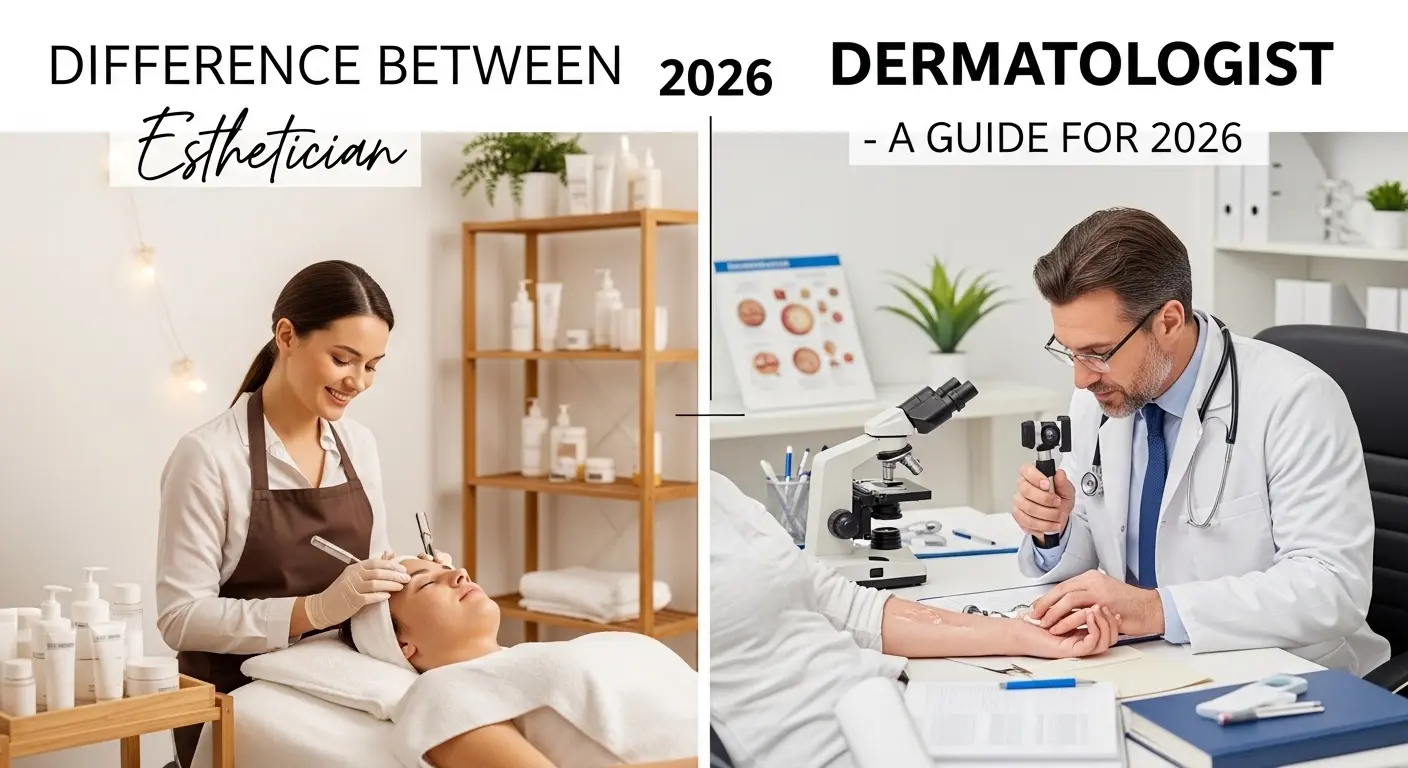
A few months ago, a friend complained about stubborn acne and asked whether she should visit a skincare salon or a medical doctor. This simple question highlights a common confusion many people face today the difference between esthetician and dermatologist. Both professionals work with skin, but their roles, training, and responsibilities are very different.
An esthetician is a trained skincare specialist who focuses mainly on cosmetic treatments such as facials, exfoliation, and improving the appearance of skin. A dermatologist, on the other hand, is a medical doctor who diagnoses and treats skin diseases like eczema, psoriasis, or severe acne.
Understanding the difference between esthetician and dermatologist helps people choose the right professional for their skin concerns. Many learners, beauty enthusiasts, and even professionals search for the difference between esthetician and dermatologist because both deal with skincare but operate in different fields.
Knowing the difference between esthetician and dermatologist can save time, money, and prevent improper treatment choices.
Key Difference Between the Both
The primary difference lies in medical authority and training. An esthetician provides cosmetic skin care services, while a dermatologist is a licensed medical doctor who can diagnose diseases, prescribe medication, and perform medical procedures.
Why Their Difference Is Necessary to Know for Learners and Experts
Understanding these roles is important for society because skincare is not only about beauty but also about health. Estheticians contribute to personal grooming, confidence, and preventive skin care. Dermatologists protect people from serious skin conditions, infections, and even skin cancers.
For learners and professionals in the beauty and health industries, knowing the difference between esthetician and dermatologist helps them guide clients correctly. For society, it ensures people seek the right treatment at the right time.
Pronunciation of Both
Esthetician
- US: /ˌesθəˈtɪʃən/
- UK: /ˌiːsθəˈtɪʃən/
Dermatologist
- US: /ˌdɜːrməˈtɑːlədʒɪst/
- UK: /ˌdɜːməˈtɒlədʒɪst/
A clear understanding of these terms helps readers make better skincare decisions. Now let’s explore the difference between esthetician and dermatologist in detail.
Difference Between Esthetician and Dermatologist
1. Level of Education
An esthetician typically completes a specialized skincare training program lasting a few months to a year. Their education focuses on cosmetic treatments and skin care techniques.
A dermatologist completes medical school and years of specialized training in skin health. Their education includes studying diseases, medical treatments, and surgical procedures.
Examples:
- An esthetician learns how to perform a facial treatment for dry skin.
- A dermatologist studies how to treat severe acne medically.
2. Medical Authority
Estheticians cannot prescribe medicines or diagnose diseases. They provide cosmetic skin care services only.
Dermatologists have full medical authority to diagnose conditions and prescribe treatments.
Examples:
- An esthetician recommends moisturizing treatments.
- A dermatologist prescribes antibiotics for acne.
3. Work Environment
Estheticians commonly work in spas, salons, or beauty clinics where cosmetic services are offered.
Dermatologists usually work in hospitals, medical clinics, or private medical practices.
Examples:
- A spa offering facial treatments employs estheticians.
- A hospital dermatology department employs dermatologists.
4. Types of Treatments
Estheticians focus on treatments that improve skin appearance such as facials, waxing, and exfoliation.
Dermatologists treat medical conditions like skin infections, allergies, and tumors.
Examples:
- An esthetician performs a chemical exfoliation.
- A dermatologist removes a suspicious mole.
5. Scope of Practice
The esthetician’s work is limited to the outer layer of the skin and cosmetic improvement.
Dermatologists can treat deeper skin issues and internal causes of skin disease.
Examples:
- An esthetician treats dull skin.
- A dermatologist treats eczema.
6. Tools and Equipment
Estheticians use beauty tools such as steamers, facial masks, and exfoliating devices.
Dermatologists use medical tools such as biopsy instruments and laser treatment machines.
Examples:
- An esthetician uses a facial steamer during a treatment.
- A dermatologist performs laser surgery.
7. Treatment Goals
Estheticians aim to enhance skin appearance and relaxation.
Dermatologists focus on curing diseases and improving medical skin health.
Examples:
- An esthetician provides an anti-aging facial.
- A dermatologist treats skin cancer.
8. Licensing Requirements
Estheticians receive certification from beauty training institutes and must pass licensing exams in many regions.
Dermatologists must complete medical licensing and professional certification.
Examples:
- A licensed esthetician works in a beauty salon.
- A board-certified dermatologist practices medicine.
9. Type of Clients
Estheticians mainly serve clients seeking beauty enhancement and routine skin care.
Dermatologists treat patients suffering from medical skin conditions.
Examples:
- Someone wanting glowing skin visits an esthetician.
- Someone with a rash visits a dermatologist.
10. Cost of Services
Esthetician services are generally less expensive because they are cosmetic treatments.
Dermatology treatments can be costly due to medical procedures and medications.
Examples:
- A facial treatment costs relatively little.
- A dermatology procedure may require medical consultation fees.
Nature and Behaviour of Both
Esthetician
Estheticians are usually client-focused, gentle, and service-oriented. Their work emphasizes comfort, relaxation, and beauty enhancement.
Dermatologist
Dermatologists tend to be analytical and medically oriented. Their work requires diagnostic thinking and scientific understanding.
Why People Are Confused About Their Use
People often confuse these terms because both professionals deal with skin care. The overlap in skincare discussions, beauty products, and cosmetic treatments makes their roles seem similar. However, one works mainly in the beauty industry, while the other belongs to the medical field.
Table Showing Differences and Similarities
| Aspect | Esthetician | Dermatologist | Similarity |
| Education | Beauty training program | Medical degree | Both study skin |
| Workplace | Spa or salon | Hospital or clinic | Serve skin-related needs |
| Authority | Cosmetic services | Medical treatments | Improve skin condition |
| Treatments | Facials, waxing | Surgery, medication | Help skin health |
| Clients | Beauty-focused | Medical patients | Provide skin advice |
Which Is Better in What Situation?
Esthetician
An esthetician is better when someone wants cosmetic skincare improvements such as glowing skin, relaxation facials, exfoliation, or regular beauty maintenance. These treatments enhance appearance and help maintain healthy skin.
Dermatologist
A dermatologist is better when someone has serious skin issues such as severe acne, rashes, infections, or skin cancer concerns. Medical expertise ensures proper diagnosis and treatment.
Use in Metaphors and Similes
Sometimes these words appear metaphorically.
Examples:
- “She treated the project like a dermatologist treats skin problems.”
- “The designer polished the idea like an esthetician polishing skin.”
Connotative Meaning
Esthetician
- Connotation: Positive or neutral
- Example: “Her esthetician’s touch made the spa famous.”
Dermatologist
- Connotation: Positive and professional
- Example: “The dermatologist saved the patient from a serious skin disease.”
Idioms or Proverbs Related to Skin Care
Though not specific to the professions, related idioms include:
“Beauty is only skin deep.”
Example: A good esthetician reminds clients that beauty is only skin deep.
“Save your skin.”
Example: Visiting a dermatologist early can save your skin from disease.
Works in Literature Mentioning These Terms
- Skin Deep Health nonfiction, Dr. Ted Lain, 2019
- The Skin Type Solution Health guide, Leslie Baumann, 2006
- Beyond Soap Medical/dermatology guide, Dr. Sandy Skotnicki, 2018
Movies Related to Skin or Dermatology Themes
- The Skin I Live In (2011, Spain)
- Dermaphoria (2014, USA)
FAQs:
1. What is the main difference between esthetician and dermatologist?
An esthetician provides cosmetic skincare services, while a dermatologist diagnoses and treats medical skin conditions.
2. Can an esthetician treat acne?
They can help with mild acne through skincare treatments but cannot prescribe medication.
3. When should someone visit a dermatologist?
When dealing with serious skin issues like infections, severe acne, or unusual moles.
4. Do estheticians and dermatologists work together?
Yes, they sometimes collaborate to provide both cosmetic and medical skin care.
5. Which profession requires more education?
Dermatology requires extensive medical education and training.
How Both Are Useful for Surroundings
Both professionals contribute to public health and confidence. Estheticians help people maintain healthy-looking skin and boost self-esteem. Dermatologists diagnose diseases, prevent skin complications, and promote overall health.
Final Words for Both
Estheticians and dermatologists play unique but complementary roles in skin care. One enhances beauty and relaxation, while the other ensures medical health and safety of the skin.
Conclusion:
The difference between esthetician and dermatologist lies mainly in education, authority, and the type of services they provide. Estheticians specialize in cosmetic skin treatments that improve appearance and comfort, while dermatologists focus on diagnosing and treating medical skin conditions.
Understanding the difference between esthetician and dermatologist allows people to choose the correct professional depending on their skin needs. Both professions are essential in modern society, contributing to confidence, beauty, and medical well-being. When people understand the difference between esthetician and dermatologist, they can make smarter decisions for both cosmetic care and medical treatment.

I am an English content writer with more than 8 years of experience in writing about English word differences, grammar clarity, and everyday language usage. I am passionate about helping learners avoid common mistakes caused by similar-looking or confusing English words.
At diffrulee.com, I write easy-to-understand guides that explain the difference between commonly confused words, spelling variations, and correct usage with real-life examples. My content is especially useful for students, writers, and non-native English speakers who want quick, accurate, and practical answers.