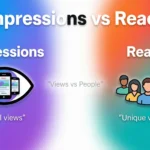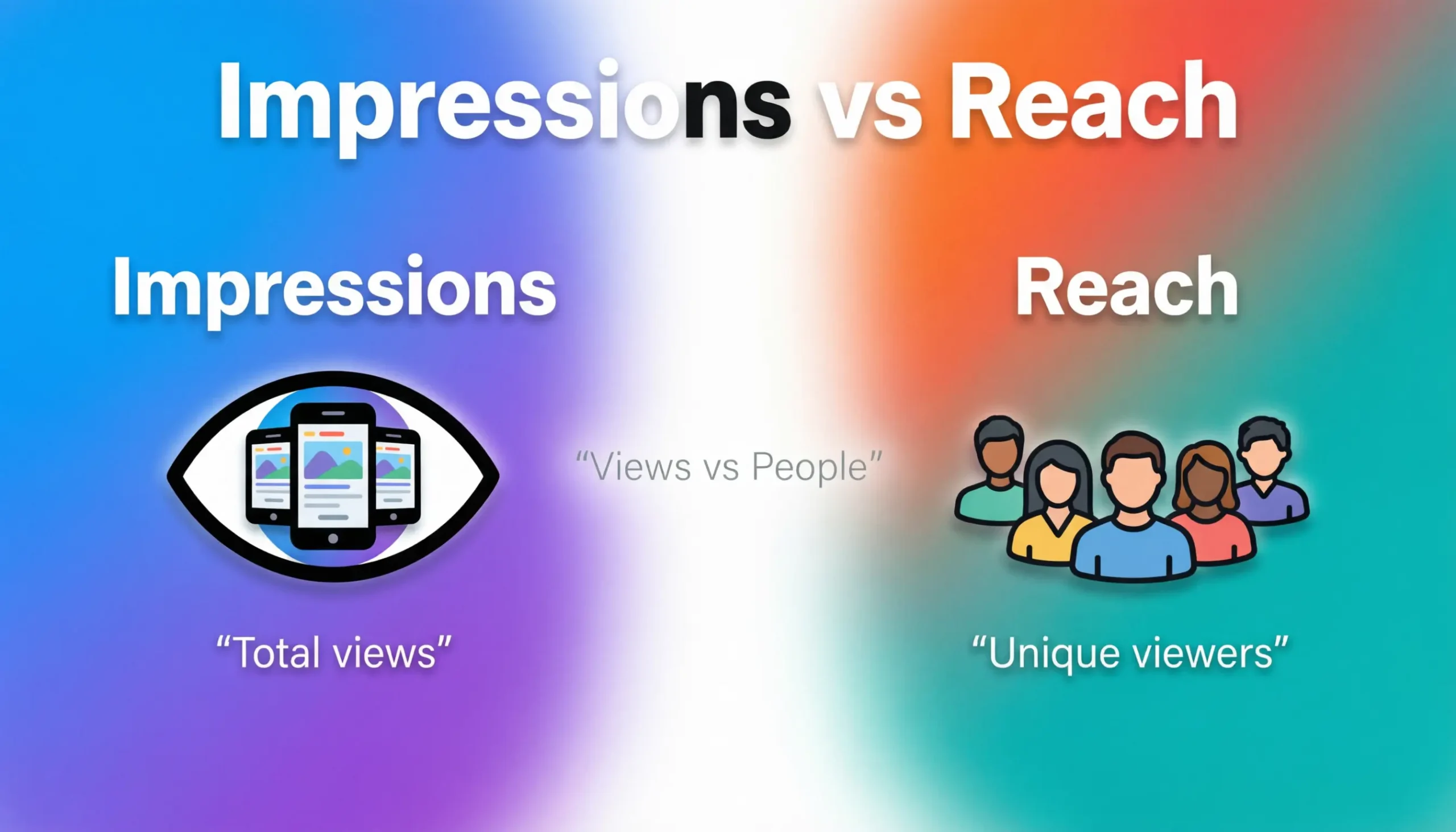
“The difference between impressions and reach is simple. Reach shows how many unique people saw your content at least once. Impressions show the total number of times your content was displayed. One person can create many impressions if they view the same post multiple times.
Have you ever checked your social media analytics and seen the words “impressions” and “reach”? Many people get confused because both numbers look similar. But they are not the same thing.
This confusion is common for beginners, business owners, bloggers, and social media managers. You may wonder which number matters more or which one shows better performance. Some people think impressions and reach mean the same thing, but they measure different things.
Understanding the difference between impressions and reach can help you improve your posts, ads, and marketing results. It also helps you know how many people actually saw your content and how often they saw it.
In this guide, you will learn what impressions mean, what reach means, how they work, key differences, real-life examples, common mistakes, and which metric is better for different goals.
What Is Reach?
Reach means the number of unique people who saw your content.
If 100 different people see your Instagram post, your reach is 100. Even if some people look at the post many times, they still count only once in reach.
Key Features of Reach
- Counts unique viewers
- Measures audience size
- Shows how many people your content touched
- Used in social media and advertising
Real-Life Example
Imagine you post a photo on Facebook. Ten different people see it. Your reach is 10.
If those same people see the post again later, the reach still stays 10 because they are the same people.
What Is Impressions?
Impressions mean the total number of times your content appeared on screens.
It counts every view, even if the same person sees the content again and again.
Key Features of Impressions
- Counts total views
- Includes repeat views
- Measures visibility
- Often higher than reach
Real-Life Example
Suppose 10 people see your post. Five of them view it twice. Your impressions become 15 because all views are counted.
Difference Between Impressions and Reach
| Feature | Reach | Impressions |
| Meaning | Number of unique viewers | Total number of views |
| Use | Measures audience size | Measures content visibility |
| Features | Counts people once | Counts every view |
| Purpose | Shows how many people saw content | Shows how often content appeared |
Key Differences Explained
Reach Measures Unique People
Reach focuses on unique users.
If one person sees your post five times, reach still counts only one person.
This helps businesses know how many real people their content touched.
Example
A clothing brand shares a new product post. Fifty different users see it. Reach becomes 50.
Impressions Measure Total Views
Impressions count every single view.
Even repeated views from the same user are included.
This helps marketers know how visible their content is.
Example
If those same 50 users view the post twice, impressions become 100.
Reach Shows Audience Size
Reach tells you how wide your content spreads.
A higher reach means more people discovered your content.
This metric is useful for brand awareness.
Example
A new business wants more people to know about its products. It focuses on increasing reach.
Impressions Show Content Exposure
Impressions show how often people see content.
More impressions usually mean users are seeing the content repeatedly.
This can improve brand memory.
Example
A company runs the same ad many times so people remember the product name.
Reach Is Usually Lower
Reach is often lower because each person counts once.
Impressions are usually higher because repeated views are added.
Example
A TikTok video may have:
- Reach: 2,000
- Impressions: 5,000
This means many people watched the video more than once.
Examples
Example 1: Instagram Story
- 200 people watched the story
- Some people watched it twice
- Reach = 200
- Impressions = 320
Example 2: Facebook Ad
A local restaurant runs an ad.
- 1,000 unique people see the ad
- Many users see it three times
Results:
- Reach = 1,000
- Impressions = 3,000
Example 3: YouTube Thumbnail
A video thumbnail appears many times in search results.
- 500 people see it
- Some users see it several times
Results:
- Reach = 500
- Impressions = 1,200
Importance of Knowing the Difference
Understanding impressions vs reach is very important in digital marketing.
It helps people measure success correctly.
If you only look at impressions, you may think many people saw your content. But repeated views from the same users can increase impressions.
If you only look at reach, you may miss how often people see your content.
Knowing both metrics gives a clearer picture of performance.
Why It Matters
- Helps improve marketing strategy
- Shows audience behavior
- Helps track ad performance
- Reduces reporting confusion
Benefits of Understanding Impressions vs Reach
Better Decisions
You can choose the right strategy based on your goals.
Less Confusion
You understand what analytics numbers really mean.
Smarter Marketing Choices
You know whether to focus on more viewers or more visibility.
Better Content Planning
You can create posts that improve both reach and impressions.
Improved Advertising
Businesses can decide whether ads need wider exposure or repeated exposure.
Common Mistakes People Make
Thinking Both Terms Mean the Same
This is the biggest mistake.
Reach and impressions are connected but not identical.
Ignoring Repeat Views
Some marketers only look at impressions and forget that repeated views increase the number.
Focusing Only on Reach
A post may reach many people but still not stay memorable.
Focusing Only on Impressions
High impressions do not always mean new people are seeing your content.
Misreading Analytics
Beginners sometimes believe impressions equal viewers, which is incorrect.
Real-Life Use
Social Media Platforms
Platforms like Instagram, Facebook, TikTok, and LinkedIn use both metrics.
Digital Advertising
Advertisers check impressions to measure ad exposure.
Brand Awareness Campaigns
Businesses use reach to attract new audiences.
Marketing Agencies
Agencies study both numbers to improve campaigns.
Influencer Marketing
Influencers use reach to show audience size and impressions to show visibility.
Easy Trick to Remember the Difference
Here is a simple memory trick:
Reach = Real People
Think of reach as counting people only once.
Impressions = Every View
Think of impressions as counting every appearance.
Another easy way:
- Reach = “Who saw it?”
- Impressions = “How many times was it seen?”
Which One Is Better?
There is no single winner in the impressions vs reach debate.
The better metric depends on your goal.
Choose Reach When:
- You want new people to discover your brand
- You want audience growth
- You care about unique viewers
Choose Impressions When:
- You want repeated visibility
- You want people to remember your brand
- You run advertising campaigns
Best Option
Most marketers track both together because they provide different insights.
FAQs
What is the difference between impressions and reach?
Reach counts unique people who saw content. Impressions count the total number of views, including repeated views.
Which is better, impressions or reach?
Neither is always better. Reach is better for audience growth, while impressions are better for measuring visibility.
Why are impressions and reach confused?
People confuse them because both measure content views, but they count views differently.
Are impressions and reach the same?
No. Reach counts unique viewers once, while impressions count every view.
When should I use reach?
Use reach when you want to know how many people discovered your content.
When should I focus on impressions?
Focus on impressions when repeated visibility matters, such as ads or branding campaigns.
Which metric is easier to understand?
Reach is usually easier for beginners because it simply counts unique people.
Conclusion
The difference between impressions and reach becomes easy once you understand how each metric works. Reach measures the number of unique people who saw your content, while impressions measure the total number of times the content appeared. One person can create many impressions, but they count only once in reach.
Both metrics are useful in social media marketing and advertising. Reach helps you understand audience size and brand discovery. Impressions help you measure visibility and repeated exposure. Neither metric is better in every situation because both serve different purposes.
If your goal is to attract new people, focus more on reach. If your goal is to keep your brand visible, focus more on impressions. The smartest strategy is to track both together. This gives you a complete picture of how your content performs online.

I am an English language writer and editor with over 10 years of experience in explaining confusing English words, grammar rules, and word usage differences. I specialize in making complex language topics simple, clear, and practical for everyday readers.
At diffrulee.com, I am helping learners to understand common English word differences such as spelling variations, similar meanings, and correct usage in American and British English. My writing style is reader-friendly, example-driven, and designed to improve confidence in written and spoken English.