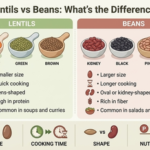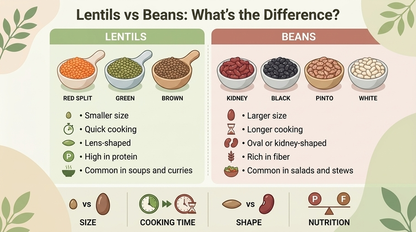
Lentils are small, lens-shaped seeds that cook faster and usually do not need soaking, while beans are larger, come in many varieties, and often require soaking and longer cooking times.
In many kitchens around the world, especially in South Asia, a simple meal often begins with a pot simmering on the stove. A mother might prepare lentils for a quick dinner, while on weekends, a richer bean curry is served for the family. This everyday scene reflects a common yet overlooked question: the difference between lentils and beans.
Though both are staples in countless diets, people often confuse them due to their similar appearance and nutritional value.
The difference between lentils and beans lies not only in their size and shape but also in how they are cooked, digested, and used in recipes. Understanding the difference between lentils and beans can help improve cooking choices, dietary planning, and even agricultural practices.
If you’re a beginner cook or a nutrition expert, knowing the difference between lentils and beans can make a real impact on your daily life.
Key Difference Between the Both
Lentils are small, lens-shaped legumes that cook quickly without soaking, while beans are larger, more varied in shape, and usually require soaking before cooking.
Why Is Their Difference Important to Know?
Understanding the difference between lentils and beans is essential for both learners and experts. For home cooks, it saves time and improves meal planning. Nutritionists rely on these differences to design balanced diets, especially in regions where legumes are primary protein sources.
Farmers benefit from knowing their growth cycles and soil needs. In society, both lentils and beans play a crucial role in food security, offering affordable and sustainable nutrition to millions.
Pronunciation (US & UK)
- Lentils
- US: /ˈlɛn.təlz/
- UK: /ˈlen.tɪlz/
- Beans
- US: /biːnz/
- UK: /biːnz/
Difference Between Lentils and Beans
1. Size and Shape
- Lentils are small and flat like tiny lenses.
Example: Red lentils in soup; green lentils in salads. - Beans are larger and kidney-shaped or oval.
Example: Kidney beans in curry; black beans in tacos.
2. Cooking Time
- Lentils cook quickly (15–30 minutes).
Example: Quick lentil soup; instant dal. - Beans take longer (1–2 hours).
Example: Slow-cooked chili; baked beans.
3. Soaking Requirement
- Lentils do not require soaking.
Example: Yellow lentils cooked directly; brown lentils in stews. - Beans usually need soaking.
Example: Soaked chickpeas; soaked kidney beans.
4. Texture
- Lentils become soft and mushy.
Example: Dal curry; lentil puree. - Beans remain firm after cooking.
Example: Bean salad; burrito filling.
5. Variety
- Lentils have fewer varieties.
Example: Red lentils; green lentils. - Beans have many types.
Example: Pinto beans; navy beans.
6. Nutritional Profile
- Lentils are rich in protein and fiber but lower in fat.
Example: Diet meals; vegetarian protein source. - Beans offer more complex carbs and minerals.
Example: Energy-rich meals; sports diets.
7. Digestibility
- Lentils are easier to digest.
Example: Baby food; light meals. - Beans can cause bloating.
Example: Heavy meals; large portions.
8. Culinary Uses
- Lentils are used in soups and curries.
Example: Lentil soup; dal fry. - Beans are used in diverse dishes.
Example: Chili con carne; bean burgers.
9. Color
- Lentils are usually earthy colors.
Example: Brown lentils; orange lentils. - Beans come in vibrant colors.
Example: Red beans; black beans.
10. Cost and Availability
- Lentils are often cheaper and widely available.
Example: Daily meals; budget cooking. - Beans can be slightly more expensive.
Example: Specialty dishes; imported varieties.
Nature and Behaviour
- Lentils: Quick-cooking, soft-textured, and ideal for simple meals. They absorb flavors easily and break down during cooking.
- Beans: Slow-cooking, firm-textured, and versatile. They hold their shape and provide a hearty bite.
Why Are People Confused?
People often confuse lentils and beans because both belong to the legume family, look somewhat similar, and are used as protein-rich foods. Additionally, in many cultures, they are grouped together in grocery stores and recipes, which increases confusion.
Table: Difference and Similarity
| Feature | Lentils | Beans | Similarity |
| Size | Small, flat | Larger, oval | Both are legumes |
| Cooking Time | Quick | Slow | Both require boiling |
| Soaking | Not needed | Usually needed | Improve texture when soaked |
| Texture | Soft | Firm | Both become edible when cooked |
| Nutrition | High protein, low fat | High fiber, complex carbs | Both are nutritious |
Which Is Better in What Situation?
Lentils are better when you need a quick, healthy meal. They cook fast and are ideal for soups, light curries, and everyday dishes. For busy individuals or quick recipes, lentils are the best choice.
Beans are better for rich, hearty meals that require texture and depth. They work well in slow-cooked dishes, salads, and international cuisines. When you have time and want a filling meal, beans are more suitable.
Metaphors and Similes
- “As humble as lentils” representing simplicity
- “Full of beans” meaning energetic
- “Like lentils in a pot” blending easily
- “Like beans spilling everywhere” chaos or abundance
Connotative Meanings
- Lentils: Neutral to positive (simplicity, humility)
Example: “He lived on lentils, yet remained content.” - Beans: Positive or playful (energy, liveliness)
Example: “She’s full of beans today!”
Idioms and Proverbs
- “Full of beans” very energetic
Example: The kids were full of beans after the party. - “Spill the beans” reveal a secret
Example: He accidentally spilled the beans about the surprise.
Works in Literature
- “Lentil as Anything” Memoir, Shanaka Fernando, 2007
- “Jack and the Beanstalk” Fairy tale, Joseph Jacobs, 1890
Movies Related to the Keywords
- “Jack and the Beanstalk” (2009, USA)
- “Cloudy with a Chance of Meatballs” (2009, USA includes beans humorously)
FAQs
1. Are lentils and beans the same?
No, lentils are smaller and cook faster, while beans are larger and require soaking.
2. Which is healthier?
Both are healthy, but lentils are easier to digest.
3. Can lentils replace beans?
Yes, in some recipes, but texture will differ.
4. Why do beans need soaking?
To reduce cooking time and improve digestion.
5. Are lentils cheaper than beans?
Generally, yes, lentils are more affordable.
How Both Are Useful for Surroundings
Lentils and beans enrich soil by fixing nitrogen, reducing the need for chemical fertilizers. They are environmentally friendly crops and support sustainable agriculture.
Final Words for Both
Lentils are quick, simple, and reliable, while beans are rich, diverse, and hearty. Both hold a valuable place in kitchens and cultures worldwide.
Conclusion
The difference between lentils and beans goes beyond size and cooking time it reflects their role in nutrition, culture, and daily life. Lentils offer convenience and simplicity, making them ideal for quick meals, while beans provide variety and richness for more elaborate dishes. Understanding the difference between lentils and beans helps individuals make better dietary choices, enhances cooking skills, and supports sustainable food practices. Whether you prefer the softness of lentils or the firmness of beans, both are essential, nutritious, and versatile ingredients that continue to nourish millions across the globe.

I am an English language writer and editor with over 10 years of experience in explaining confusing English words, grammar rules, and word usage differences. I specialize in making complex language topics simple, clear, and practical for everyday readers.
At diffrulee.com, I am helping learners to understand common English word differences such as spelling variations, similar meanings, and correct usage in American and British English. My writing style is reader-friendly, example-driven, and designed to improve confidence in written and spoken English.