Imagine you’re walking in a busy street, and suddenly you hear a loud horn. Instantly, your body reacts, you jump, your heart races, and your brain becomes alert. This rapid response is driven by neurotransmitters. Later, as you calm down, your body slowly returns to normal, guided by hormones. This simple moment reflects the difference between neurotransmitters and hormones in real life.
Understanding the difference between neurotransmitters and hormones is essential because both play crucial roles in how our body communicates internally.
While neurotransmitters act like quick messengers in the nervous system, hormones travel more slowly through the bloodstream. The difference between neurotransmitters and hormones lies in their speed, function, and pathways.
In everyday life, recognizing the difference between neurotransmitters and hormones helps us understand emotions, stress, and overall health.
Key Difference Between the Both
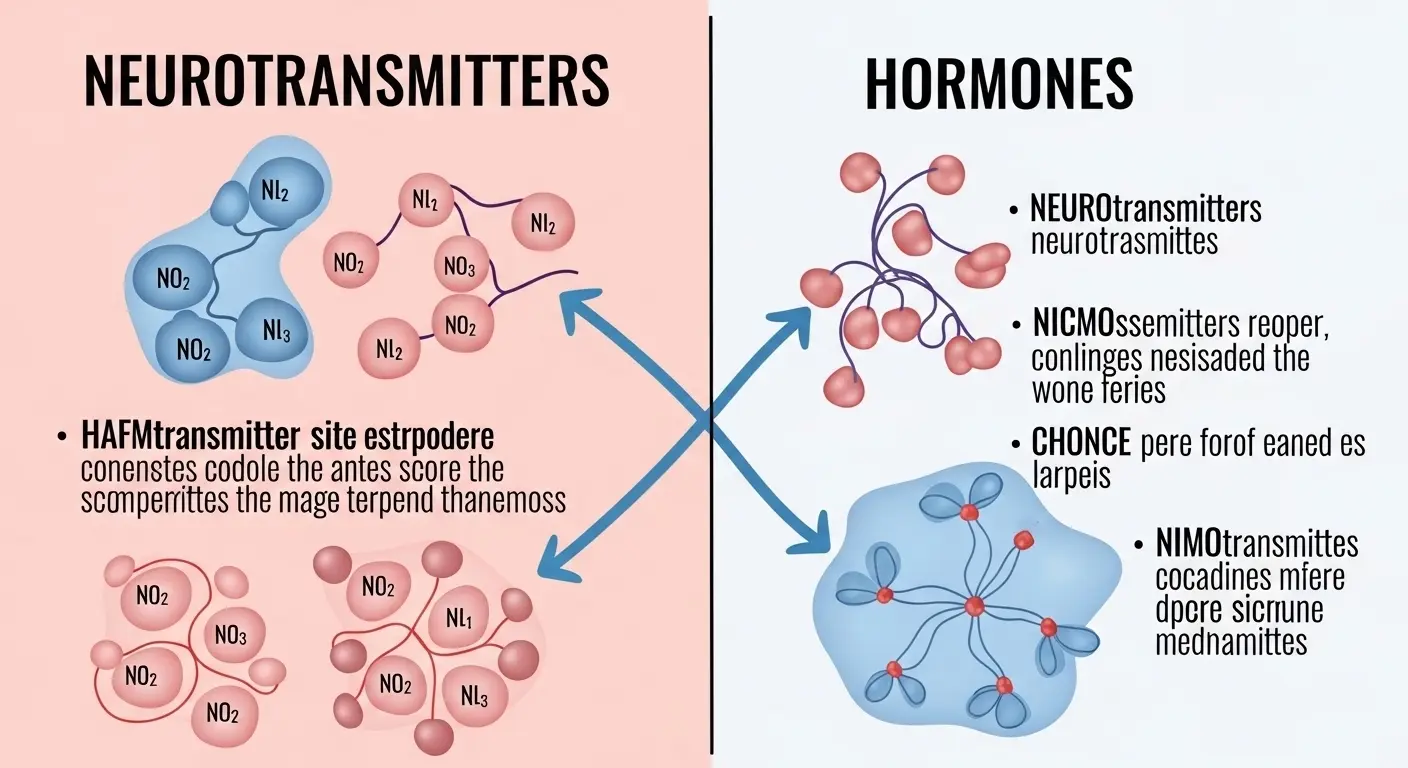
The main difference is that neurotransmitters transmit signals quickly across neurons, while hormones travel through the bloodstream and act more slowly but over longer durations.
Why Is Their Difference Necessary to Know for Learners and Experts?
Understanding neurotransmitters and hormones is vital for both learners and professionals. For students, it builds a strong foundation in biology, psychology, and medicine. Experts use this knowledge to diagnose and treat conditions like depression, anxiety, and hormonal imbalances.
In society, this knowledge helps improve mental health awareness, guides medical treatments, and enhances well-being. For example, knowing how stress hormones affect behavior can lead to better lifestyle choices. Thus, their importance extends from classrooms to hospitals and everyday life.
Pronunciation
- Neurotransmitters
- US: /ˌnʊroʊtrænzˈmɪtərz/
- UK: /ˌnjʊərəʊtrænzˈmɪtəz/
- Hormones
- US: /ˈhɔːrmoʊnz/
- UK: /ˈhɔːməʊnz/
Difference Between Neurotransmitters and Hormones
1. Mode of Transmission
- Neurotransmitters: Travel across synapses between neurons.
- Example 1: Dopamine signaling between brain cells
- Example 2: Acetylcholine at neuromuscular junctions
- Hormones: Travel through the bloodstream.
- Example 1: Insulin regulating blood sugar
- Example 2: Thyroxine controlling metabolism
2. Speed of Action
- Neurotransmitters: Act very fast (milliseconds).
- Example 1: Reflex actions
- Example 2: Instant pain response
- Hormones: Act slowly (seconds to hours).
- Example 1: Growth hormone effects
- Example 2: Cortisol release during stress
3. Duration of Effect
- Neurotransmitters: Short-lasting effects.
- Example 1: Quick mood changes
- Example 2: Temporary muscle contraction
- Hormones: Long-lasting effects.
- Example 1: Puberty changes
- Example 2: Long-term stress impact
4. Area of Effect
- Neurotransmitters: Localized action.
- Example 1: Brain circuits
- Example 2: Spinal cord responses
- Hormones: Widespread action.
- Example 1: Blood sugar regulation
- Example 2: Growth throughout the body
5. Source of Release
- Neurotransmitters: Released by neurons.
- Example 1: Brain neurons
- Example 2: Peripheral nerves
- Hormones: Secreted by endocrine glands.
- Example 1: Pituitary gland
- Example 2: Adrenal glands
6. Function
- Neurotransmitters: Communication within the nervous system.
- Example 1: Memory formation
- Example 2: Muscle movement
- Hormones: Regulation of body processes.
- Example 1: Metabolism
- Example 2: Reproduction
7. Chemical Nature
- Neurotransmitters: Often amino acids or small molecules.
- Example 1: Serotonin
- Example 2: GABA
- Hormones: Can be proteins, steroids, or peptides.
- Example 1: Estrogen
- Example 2: Insulin
8. Control System
- Neurotransmitters: Nervous system control.
- Example 1: Brain signals
- Example 2: Reflex arcs
- Hormones: Endocrine system control.
- Example 1: Hormonal cycles
- Example 2: Stress response
9. Precision
- Neurotransmitters: Highly precise targeting.
- Example 1: Specific synapse activation
- Example 2: Controlled nerve signaling
- Hormones: Less precise, broader targeting.
- Example 1: Hormones affecting multiple organs
- Example 2: System-wide changes
10. Examples
- Neurotransmitters: Dopamine, serotonin
- Hormones: Insulin, adrenaline
Nature and Behaviour
- Neurotransmitters: Fast, precise, and short-lived. They behave like instant messengers, delivering quick signals for immediate actions.
- Hormones: Slow, widespread, and long-lasting. They act like long-term regulators, maintaining balance in the body.
Why People Are Confused About Their Use?
People often confuse them because both are chemical messengers. Some substances, like adrenaline, can act as both a neurotransmitter and a hormone. Also, both influence mood, behavior, and body functions, making their roles seem similar.
Table: Difference and Similarity
| Feature | Neurotransmitters | Hormones | Similarity |
| Speed | Fast | Slow | Both send signals |
| Pathway | Synapse | Bloodstream | Both are chemical messengers |
| Duration | Short | Long | Affect body functions |
| Area | Local | Widespread | Influence behavior |
| Source | Neurons | Glands | Regulate body systems |
Which Is Better in What Situation?
Neurotransmitters are better for situations requiring immediate responses. For example, when you touch something hot, neurotransmitters quickly signal your muscles to pull away. They are essential for survival in urgent conditions and for real-time brain activities like thinking and reacting.
Hormones, on the other hand, are better for long-term regulation. They control growth, metabolism, and reproduction. For example, hormones manage stress over time and regulate sleep cycles. Without hormones, the body would lose its balance and stability.
Metaphors and Similes
- Neurotransmitters are like text messages fast and direct.
- Hormones are like postal mail slower but reaching many places.
Connotative Meaning
- Neurotransmitters: Neutral to positive
- Example: “Dopamine boost made him feel happy.”
- Hormones: Neutral (sometimes negative in context)
- Example: “Hormonal imbalance caused mood swings.”
Idioms or Proverbs
- “A chain reaction” (related to neurotransmitters)
- Example: One signal in the brain created a chain reaction.
- “Balance is key” (related to hormones)
- Example: Hormones show that balance is key in life.
Works in Literature
- The Tell-Tale Brain Science, V. S. Ramachandran, 2011
- Why Zebras Don’t Get Ulcers Science, Robert M. Sapolsky, 1994
Movies Related to the Concepts
- Inside Out (2015, USA) emotions linked to brain chemistry
- Limitless (2011, USA) brain enhancement and neurotransmitters
FAQs:
1. Are neurotransmitters and hormones the same?
No, they differ in speed, pathway, and function.
2. Can a chemical be both?
Yes, adrenaline can act as both.
3. Which works faster?
Neurotransmitters work faster.
4. Which lasts longer?
Hormones have longer effects.
5. Why are they important?
They regulate body communication and maintain health.
How Both Are Useful for Surroundings
Neurotransmitters help in communication, learning, and reactions, making daily interactions smooth. Hormones maintain balance in growth, mood, and health. Together, they ensure humans function properly in society and adapt to environmental changes.
Final Words
Neurotransmitters and hormones are essential messengers of the body. One ensures speed, while the other ensures stability. Both are equally important for survival and well-being.
Conclusion:
In conclusion, understanding the difference between neurotransmitters and hormones provides deep insight into how the human body works. While neurotransmitters offer rapid communication within the nervous system, hormones regulate long-term processes across the body. Their differences in speed, function, and pathways highlight their unique roles.
Despite these differences, both work together to maintain balance, health, and proper functioning. Learning about them not only enhances academic knowledge but also improves awareness of mental and physical health. Ultimately, both are indispensable systems that keep the human body in harmony.

I am an English content writer with more than 8 years of experience in writing about English word differences, grammar clarity, and everyday language usage. I am passionate about helping learners avoid common mistakes caused by similar-looking or confusing English words.
At diffrulee.com, I write easy-to-understand guides that explain the difference between commonly confused words, spelling variations, and correct usage with real-life examples. My content is especially useful for students, writers, and non-native English speakers who want quick, accurate, and practical answers.