A few years ago, a family faced a confusing diagnosis when their loved one was told they had blood-related cancer. The doctor mentioned both lymphoma and leukemia, leaving them puzzled. Are these the same? Are they treated the same? This real-life situation highlights how important it is to understand the difference between lymphoma and leukemia.
The difference between lymphoma and leukemia lies in where the cancer begins and how it spreads in the body.
While both are cancers of the blood and immune system, they behave differently. Knowing the difference between lymphoma and leukemia can help patients, families, and even learners make better health decisions.
In this article, we’ll explore the difference between lymphoma and leukemia in a simple, practical way to clear all confusion.
Pronunciation (US & UK)
- Lymphoma
- US: /lɪmˈfoʊmə/
- UK: /lɪmˈfəʊmə/
- Leukemia
- US: /luːˈkiːmiə/
- UK: /luːˈkiːmiə/
Key Difference Between the Both
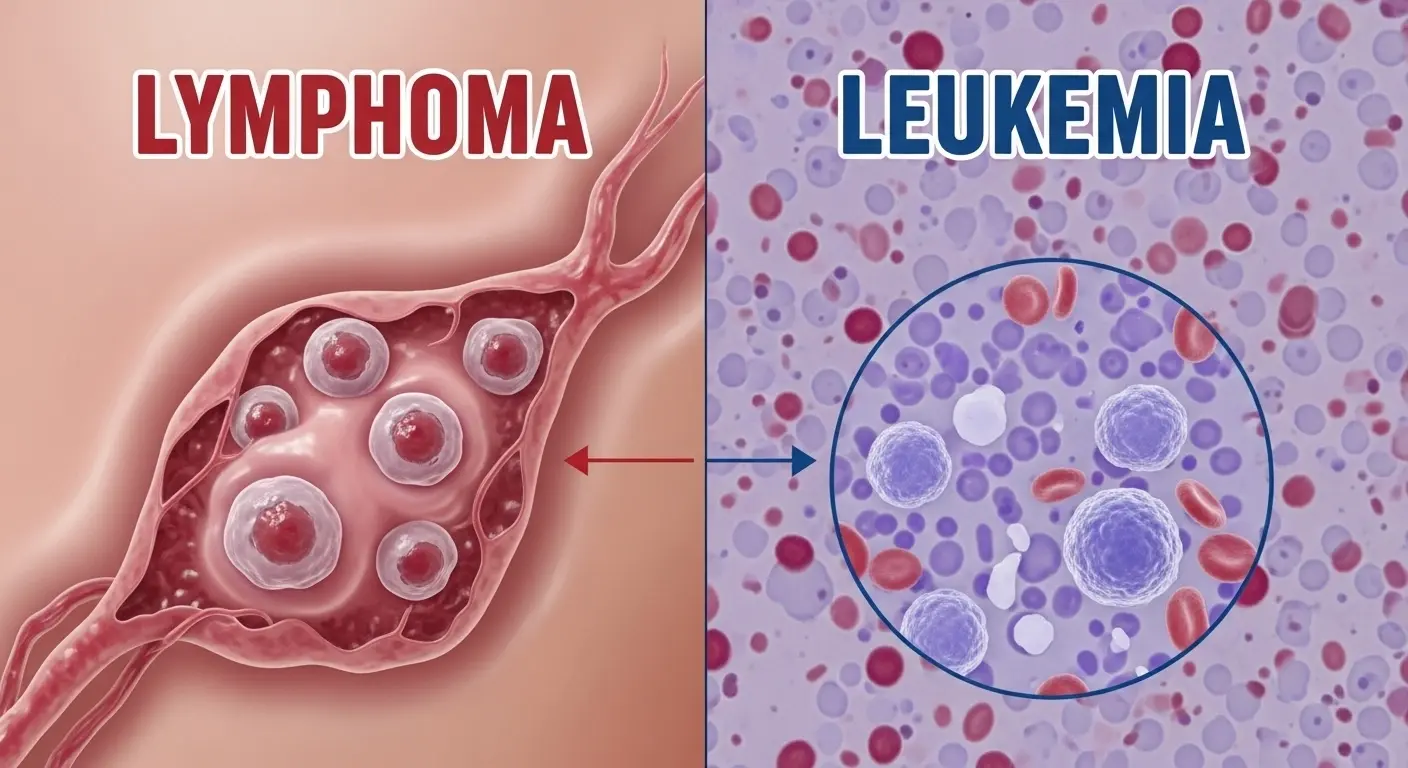
The main difference between lymphoma and leukemia is that lymphoma starts in the lymphatic system (like lymph nodes), while leukemia begins in the bone marrow and affects the blood.
Why Their Difference is Important in Society
Understanding the difference between lymphoma and leukemia is crucial for both learners and medical experts. For society, it helps in early detection, awareness campaigns, and better patient care.
For professionals, it guides accurate diagnosis and treatment planning. Misunderstanding these diseases can delay treatment, while awareness can save lives. Knowledge empowers families to support patients effectively and reduces fear through clarity.
Difference Between Lymphoma and Leukemia
1. Origin of Cancer
- Lymphoma starts in lymph nodes or lymphatic tissues.
- Example 1: Swollen lymph nodes in the neck
- Example 2: Cancer in spleen tissue
- Leukemia starts in bone marrow.
- Example 1: Abnormal white blood cells in blood
- Example 2: Bone marrow producing faulty cells
2. Area Affected
- Lymphoma mainly affects the lymphatic system.
- Example 1: Lymph nodes enlargement
- Example 2: Tonsil involvement
- Leukemia affects blood and bone marrow.
- Example 1: High white cell count
- Example 2: Blood circulation issues
3. Spread Pattern
- Lymphoma spreads through lymph vessels.
- Example 1: From neck to chest nodes
- Example 2: From lymph nodes to spleen
- Leukemia spreads through bloodstream.
- Example 1: Cells circulating in blood
- Example 2: Affecting multiple organs quickly
4. Symptoms
- Lymphoma symptoms are localized.
- Example 1: Swelling in one area
- Example 2: Night sweats
- Leukemia symptoms are systemic.
- Example 1: Fatigue
- Example 2: Frequent infections
5. Types
- Lymphoma includes Hodgkin and non-Hodgkin types.
- Example 1: Hodgkin lymphoma
- Example 2: Non-Hodgkin lymphoma
- Leukemia has multiple forms.
- Example 1: Acute leukemia
- Example 2: Chronic leukemia
6. Detection
- Lymphoma is detected through biopsy.
- Example 1: Lymph node biopsy
- Example 2: Imaging scans
- Leukemia is detected through blood tests.
- Example 1: CBC test
- Example 2: Bone marrow test
7. Growth Rate
- Lymphoma can be slow or aggressive.
- Example 1: Indolent lymphoma
- Example 2: Fast-growing lymphoma
- Leukemia varies widely.
- Example 1: Acute (fast)
- Example 2: Chronic (slow)
8. Age Group
- Lymphoma affects all ages.
- Example 1: Young adults
- Example 2: old people patients
- Leukemia often affects children and older adults.
- Example 1: Childhood leukemia
- Example 2: Adult chronic leukemia
9. Treatment Approach
- Lymphoma uses targeted therapy.
- Example 1: Radiation
- Example 2: Immunotherapy
- Leukemia often needs systemic treatment.
- Example 1: Chemotherapy
- Example 2: Stem cell transplant
10. Prognosis
- Lymphoma often has higher survival rates.
- Example 1: Early-stage cure
- Example 2: Controlled remission
- Leukemia prognosis varies.
- Example 1: Acute cases are severe
- Example 2: Chronic cases manageable
Nature and Behaviour
- Lymphoma: Usually forms solid tumors in lymph nodes and grows in a structured way.
- Leukemia: Circulates freely in blood, making it more widespread and harder to localize.
Why People Are Confused
People confuse them because both are blood cancers, share symptoms like fatigue and infection, and involve white blood cells. Medical terminology also overlaps, increasing confusion.
Table: Difference and Similarity
| Aspect | Lymphoma | Leukemia | Similarity |
| Origin | Lymph nodes | Bone marrow | Both affect immune system |
| Spread | Lymphatic system | Bloodstream | Can spread to organs |
| Form | Solid tumors | Liquid cancer | Both are cancers |
| Symptoms | Local swelling | General fatigue | Weak immunity |
| Treatment | Targeted | Systemic | Use chemotherapy |
Which is Better in What Situation?
Lymphoma is often considered more manageable when detected early because it may remain localized for a longer time. This makes targeted treatments like radiation more effective. Patients with early-stage lymphoma often have a good prognosis and higher survival rates compared to aggressive cancers.
Leukemia, on the other hand, requires urgent and systemic treatment because it spreads quickly through the blood. In some chronic forms, leukemia can be controlled for many years with medication. Therefore, leukemia may be manageable in long-term scenarios, but acute cases require immediate attention.
Metaphors and Similes
- Lymphoma is like a “localized storm” in one part of the body.
- Leukemia is like a “river carrying disease everywhere.”
Connotative Meaning
- Lymphoma: Neutral to negative (serious but often treatable)
- Example: “He fought lymphoma bravely.”
- Leukemia: Strong negative (life-threatening perception)
- Example: “Leukemia changed their lives overnight.”
Idioms or Proverbs
(No direct idioms exist, but related expressions:)
- “Fight like a warrior”
- Example: She fought leukemia like a warrior.
- “A battle within”
- Example: Lymphoma became a battle within his body.
Works in Literature
- The Emperor of All Maladies (Biography, Siddhartha Mukherjee, 2010)
Movies Related to the Diseases
- My Sister’s Keeper (2009, USA)
- Now Is Good (2012, UK)
FAQs:
1. Are lymphoma and leukemia the same?
No, they differ in origin and spread.
2. Which is more dangerous?
Both can be serious; it depends on type and stage.
3. Can they be cured?
Some types of both can be cured or controlled.
4. Do they share symptoms?
Yes, like fatigue and infections.
5. How are they diagnosed?
Lymphoma via biopsy; leukemia via blood tests.
How Both Are Useful for Surroundings
Understanding these diseases promotes awareness, early diagnosis, and community support systems. It also improves healthcare education and research development.
Final Words for Both
Both lymphoma and leukemia are serious conditions, but advancements in medicine have improved outcomes significantly. Awareness is the first step toward prevention and cure.
Conclusion:
The difference between lymphoma and leukemia lies in their origin, behavior, and treatment approaches. While lymphoma begins in the lymphatic system and often forms solid tumors, leukemia originates in the bone marrow and spreads through the blood. Despite their similarities, understanding their distinctions is vital for accurate diagnosis and effective treatment. With growing awareness and medical progress, both conditions are becoming more manageable.
By learning the difference between lymphoma and leukemia, individuals can make informed decisions, support patients better, and contribute to a healthier society.

I am an English content writer with more than 8 years of experience in writing about English word differences, grammar clarity, and everyday language usage. I am passionate about helping learners avoid common mistakes caused by similar-looking or confusing English words.
At diffrulee.com, I write easy-to-understand guides that explain the difference between commonly confused words, spelling variations, and correct usage with real-life examples. My content is especially useful for students, writers, and non-native English speakers who want quick, accurate, and practical answers.