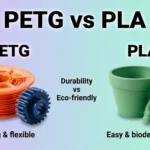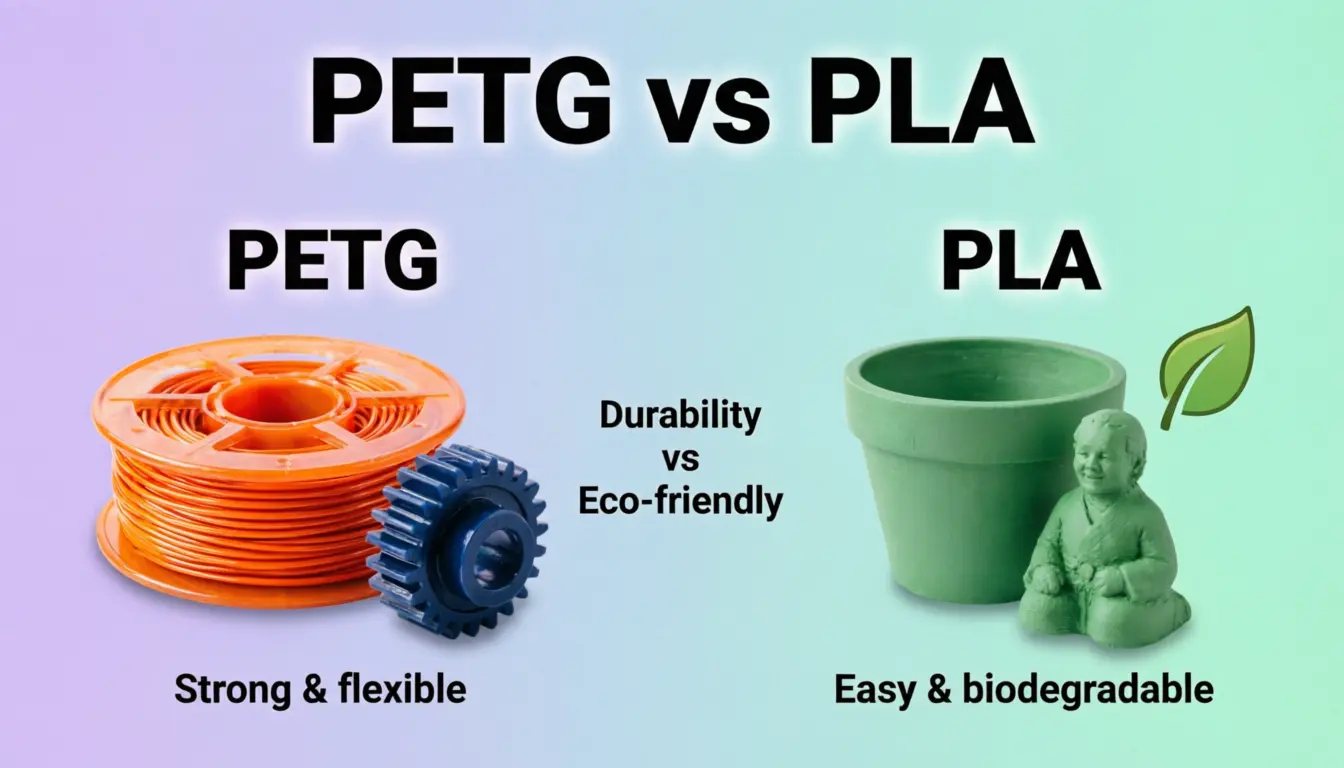
PETG and PLA are two common 3D printing plastics. PLA is easier to use and good for beginners. PETG is stronger, more flexible, and heat resistant. The difference between PETG and PLA is mainly strength, flexibility, and printing ease. This helps users choose the right material.
When people start 3D printing, they often get confused between PETG and PLA. Both are popular plastic materials used in 3D printers. But they are not the same. Many users search “difference between PETG and PLA” or “PETG vs PLA” because they want to choose the right filament for their project. If you pick the wrong one, your print may break, warp, or fail.
PLA is easy and beginner friendly. PETG is stronger and more flexible. In this guide, you will learn what PETG is, what PLA is, and how they are different. You will also see real examples, simple comparisons, and when to use each one.
By the end, you will clearly know which one is better for your needs. It is very easy to understand. No technical skills needed.
What Is PLA?
PLA is one of the most common 3D printing materials. It is made from natural sources like corn starch or sugarcane. It is safe, easy to use, and great for beginners.
Key Features of PLA
- Easy to print
- Low heat needed
- Smooth finish
- Less smell while printing
Real-Life Example
PLA is used to print toys, models, school projects, and simple home items. For example, a student can print a small car model easily with PLA.
What Is PETG?
PETG is another popular 3D printing material. It is stronger than PLA and more flexible. It can handle heat better too.
Key Features of PETG
- Strong and durable
- Flexible, not brittle
- Heat resistant
- Good for functional parts
Real-Life Example
PETG is used for water bottles, mechanical parts, and outdoor items. For example, a phone holder used in a car is often printed with PETG.
Difference Between PETG and PLA
Here is a simple comparison of both materials:
| Feature | PETG | PLA |
| Meaning | Strong plastic filament | Easy beginner filament |
| Use | Functional and strong parts | Decorative and simple prints |
| Features | Flexible and heat resistant | Easy and smooth printing |
| Purpose | Long-lasting items | Basic models and learning |
Key Differences Explained
Appearance / Design
PLA prints look smooth and shiny. PETG prints look slightly glossy but more solid.
Example: PLA is better for display models, while PETG is better for usable tools.
Features
PLA is easy to print. PETG needs a bit more control like correct temperature and speed.
Example: Beginners often fail PETG prints if settings are wrong.
Use / Purpose
PLA is for simple items. PETG is for strong and useful items.
Example: PLA for toys, PETG for brackets or holders.
Performance / Behavior
PLA can break easily under pressure. PETG bends instead of breaking.
Example: A PLA hook may snap, but a PETG hook will bend and hold.
Heat Resistance
PLA melts faster in heat. PETG handles heat better.
Example: PLA left in a hot car may deform, but PETG stays stable.
Examples
Here are simple real-life uses:
- Printing a school project → PLA
- Printing a phone stand → PETG
- Printing a toy figure → PLA
- Printing a bottle holder → PETG
- Printing home decoration → PLA
- Printing outdoor tool → PETG
These examples show clear PETG vs PLA usage in daily life.
Importance of Knowing the Difference
Knowing the difference between PETG and PLA helps you avoid failed prints. Many beginners waste time and money because they pick the wrong filament. If you understand both, you can choose better and print smarter.
Benefits of Understanding PETG vs PLA
- Better print results
- Less waste of material
- Easier project planning
- Faster learning for beginners
- Smarter material choice
This knowledge makes 3D printing simple and fun.
Common Mistakes People Make
- Thinking both are the same
- Using PLA for strong parts
- Using PETG without correct settings
- Ignoring heat limits
- Not checking project needs
Simple correction: always match material with purpose.
Real-Life Use
PLA is mostly used by beginners, students, and hobby users. PETG is used by engineers and people making real working parts.
- PLA → learning, hobbies, art
- PETG → tools, mechanical parts, outdoor use
When strength matters, PETG is better. When ease matters, PLA wins.
Easy Trick to Remember the Difference
Think like this:
- PLA = “Pretty & Light & Art” → easy and decorative
- PETG = “Powerful & Tough & Gear” → strong and useful
This simple trick helps you remember PETG vs PLA easily.
Which One Is Better?
There is no single winner. It depends on your need.
- If you are a beginner → PLA is better
- If you need strong parts → PETG is better
- If you want easy printing → PLA is better
- If you want durability → PETG is better
So, the choice depends on your project.
FAQs
1. What is the difference between PETG and PLA?
PLA is easier to print, while PETG is stronger and more flexible.
2. Which is better PETG or PLA?
It depends on use. PLA is better for beginners, PETG for strong parts.
3. Why are PETG and PLA confused?
Because both are common 3D printing filaments.
4. Are PETG and PLA the same?
No, they are different materials with different strength and use.
5. When to use PETG or PLA?
Use PLA for simple prints and PETG for strong, useful parts.
6. Which is more useful?
PETG is more useful for real-world strong items.
7. Which is easier to understand?
PLA is easier for beginners to understand and use.
Conclusion
The difference between PETG and PLA is simple but very important in 3D printing. PLA is easy, smooth, and perfect for beginners. PETG is strong, flexible, and made for real working parts.
When people search “PETG vs PLA” or “which is better PETG or PLA,” they usually want to pick the right material for their project. The truth is, both are useful, but in different ways. PLA is best for learning, models, and simple designs.
PETG is best for strong, durable, and heat-resistant parts. If you understand the difference between PETG and PLA, you can avoid failed prints and save time and money. Always choose based on your project needs. This simple guide helps you make the right choice without confusion.
Discover More Article:
- Difference Between Percentage and Percentile – Easy Guide for Beginners
- Difference Between Impressions and Reach: Simple Guide for Beginners
- Difference Between Dow and Nasdaq – Simple Guide for Beginners

I am an English content writer with more than 8 years of experience in writing about English word differences, grammar clarity, and everyday language usage. I am passionate about helping learners avoid common mistakes caused by similar-looking or confusing English words.
At diffrulee.com, I write easy-to-understand guides that explain the difference between commonly confused words, spelling variations, and correct usage with real-life examples. My content is especially useful for students, writers, and non-native English speakers who want quick, accurate, and practical answers.