When children frequently suffer from sore throats, breathing problems, or ear infections, doctors often mention tonsils and adenoids. Many parents hear these words during medical visits but are unsure about their meaning.
Imagine a child who constantly struggles with throat infections and difficulty breathing at night. The doctor explains that swollen tonsils or enlarged adenoids could be the cause. Suddenly, the family wants to understand the difference between tonsils and adenoids.
Both tonsils and adenoids are part of the body’s immune system and help fight infections, especially during childhood. However, their location, function, and symptoms when infected are different. Understanding the difference between tonsils and adenoids helps people recognize health problems earlier and communicate better with healthcare professionals.
For parents, teachers, and healthcare learners, knowing the difference between tonsils and adenoids can make medical discussions clearer and more meaningful. In everyday medical conversations, understanding the difference between tonsils and adenoids becomes an important part of basic health awareness.
Key Difference Between the Both
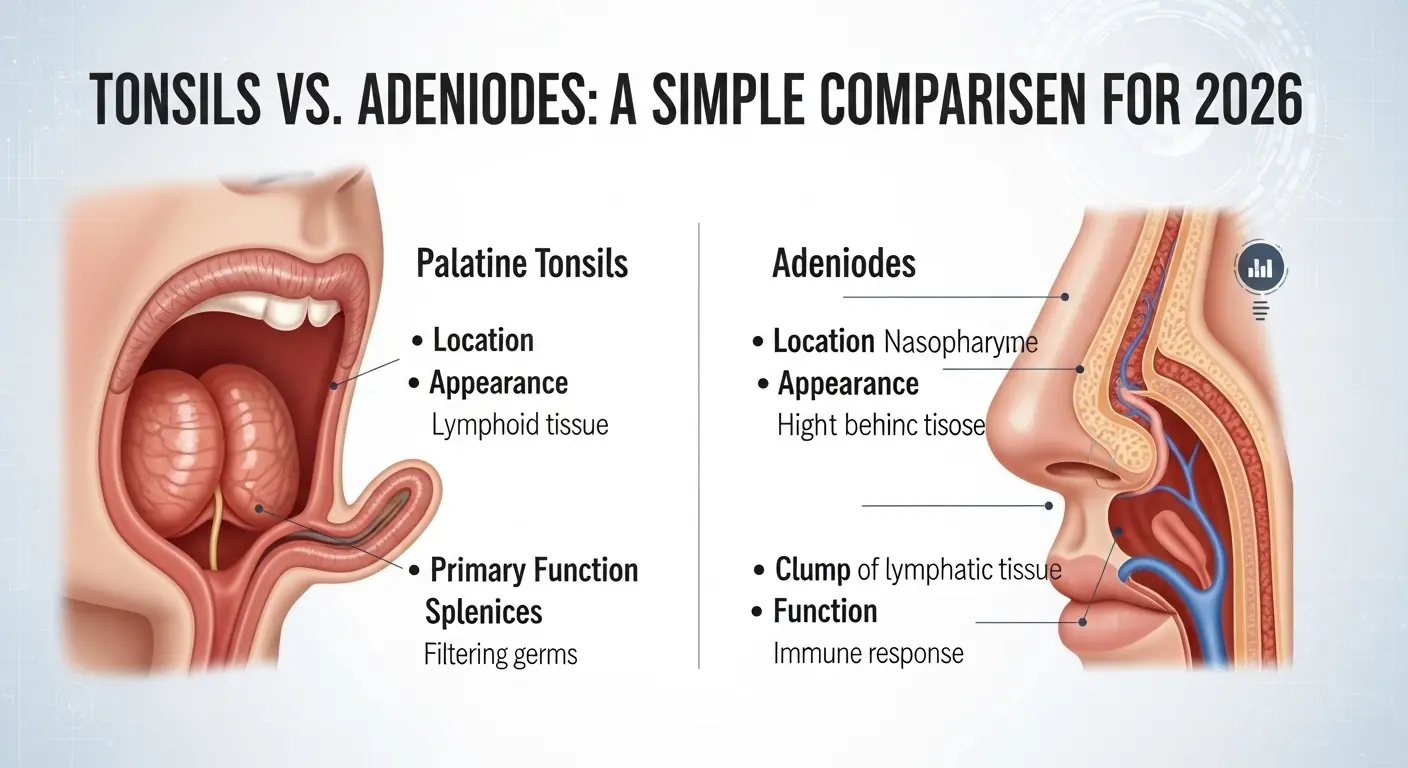
Tonsils are two small masses of lymphatic tissue located at the back of the throat, while adenoids are located higher up behind the nose, where they are not visible through the mouth.
Why Is Their Difference Necessary to Know for Learners and Experts?
Understanding the difference between tonsils and adenoids is important for both medical learners and the general public. These tissues play a role in protecting the body from infections by trapping bacteria and viruses entering through the mouth and nose. Knowing their functions helps doctors diagnose throat infections, breathing problems, and ear infections more effectively. For parents and caregivers, this knowledge helps them recognize symptoms early and seek medical care when needed. In society, awareness of these organs supports better healthcare decisions and improves communication between patients and medical professionals.
Pronunciation
Tonsils
- US: /ˈtɑːn.səlz/
- UK: /ˈtɒn.sɪlz/
Adenoids
- US: /ˈæd.ə.nɔɪdz/
- UK: /ˈæd.ə.nɔɪdz/
Before exploring the medical and functional aspects in detail, it is helpful to clearly examine the difference between tonsils and adenoids through several key points.
Difference Between Tonsils and Adenoids
1. Location
Tonsils are located at the back of the throat on both sides.
Example 1: A doctor can see swollen tonsils when examining the throat.
Example 2: During a sore throat infection, tonsils may appear red and enlarged.
Adenoids are located behind the nasal cavity.
Example 1: Adenoids cannot be seen through the mouth.
Example 2: Doctors often use special tools or X-rays to check enlarged adenoids.
2. Visibility
Tonsils are visible during a routine mouth examination.
Example 1: A patient can see their tonsils in a mirror when opening the mouth wide.
Example 2: Doctors easily inspect tonsils during throat checkups.
Adenoids are not visible without special equipment.
Example 1: Doctors may use nasal endoscopy to observe adenoids.
Example 2: Imaging tests help diagnose enlarged adenoids.
3. Shape and Structure
Tonsils are oval-shaped tissues on both sides of the throat.
Example 1: They appear like small pads near the throat opening.
Example 2: Each side of the throat contains one tonsil.
Adenoids are a single mass of tissue behind the nose.
Example 1: They resemble a soft mound in the nasal passage.
Example 2: Adenoids form part of the immune defense of the nasal area.
4. Symptoms When Enlarged
Enlarged tonsils usually cause throat pain and difficulty swallowing.
Example 1: Children may complain of pain while eating.
Example 2: Severe swelling can affect speech.
Enlarged adenoids usually affect breathing through the nose.
Example 1: A child may breathe through the mouth while sleeping.
Example 2: Snoring can occur due to blocked airflow.
5. Role in Immunity
Tonsils trap germs entering through the mouth.
Example 1: They respond to bacteria in food or saliva.
Example 2: Tonsils produce immune cells to fight infection.
Adenoids trap germs entering through the nose.
Example 1: They protect the nasal passages from harmful microbes.
Example 2: Adenoids help defend the respiratory system.
6. Age-related Changes
Tonsils remain visible throughout life but may shrink with age.
Example 1: Children often have larger tonsils than adults.
Example 2: Adults rarely experience severe tonsil enlargement.
Adenoids shrink significantly during adolescence.
Example 1: Many adults have very small adenoids.
Example 2: Children experience more adenoid problems than adults.
7. Common Medical Conditions
Tonsils often develop tonsillitis.
Example 1: Viral infections cause swollen tonsils.
Example 2: Bacterial infections may require antibiotics.
Adenoids often cause adenoiditis or nasal blockage.
Example 1: Enlarged adenoids may lead to ear infections.
Example 2: Children may experience persistent nasal congestion.
8. Surgical Removal
Tonsils are removed through a procedure called tonsillectomy.
Example 1: Doctors remove them after repeated throat infections.
Example 2: Surgery may help improve breathing problems.
Adenoids are removed through adenoidectomy.
Example 1: Doctors recommend removal for severe nasal blockage.
Example 2: It may help treat chronic ear infections.
9. Impact on Speech
Tonsil enlargement may affect throat sounds.
Example 1: Speech may sound muffled.
Example 2: Swollen tonsils may change voice clarity.
Adenoid enlargement affects nasal tone.
Example 1: Speech may sound nasal.
Example 2: Children may develop nasal speech patterns.
10. Associated Health Issues
Tonsils mainly relate to throat infections.
Example 1: Frequent sore throat episodes occur.
Example 2: Difficulty swallowing may develop.
Adenoids mainly affect breathing and ear health.
Example 1: Ear infections may become frequent.
Example 2: Sleep problems may occur.
Nature and Behaviour of Both
Tonsils:
Tonsils act as defensive immune tissues that respond quickly to infections entering through the mouth. They become inflamed during bacterial or viral infections.
Adenoids:
Adenoids behave similarly but focus on protecting the nasal passages. They react to airborne germs and may swell due to allergies or infections.
Why People Are Confused About Their Use
People often confuse tonsils and adenoids because both are lymphatic tissues that protect the body from infections. They are also commonly discussed together in medical treatments for children. Since both may require surgical removal and both are related to throat and breathing problems, many people assume they are the same structure.
Difference and Similarity Table
| Feature | Tonsils | Adenoids | Similarity |
| Location | Back of throat | Behind the nose | Both are lymphatic tissues |
| Visibility | Visible in mouth | Not visible | Both part of immune system |
| Number | Two | One mass | Both protect from infection |
| Symptoms | Sore throat | Nasal blockage | Both can swell |
| Removal | Tonsillectomy | Adenoidectomy | Both removable by surgery |
Which Is Better in What Situation?
Tonsils are more important for protecting the body from germs entering through the mouth, especially during early childhood. They help detect bacteria and viruses from food or saliva and stimulate immune responses. However, if tonsils frequently become infected, doctors may recommend removal to prevent recurring illness.
Adenoids are more helpful in protecting the nasal passages and respiratory system. They trap airborne germs before they enter deeper into the body. Enlarged adenoids can cause breathing problems, especially in children, so removal may be necessary when they interfere with normal breathing or sleep.
Use in Metaphors and Similes
Though mainly medical terms, they can appear metaphorically.
Example:
- “The tonsils of the city guarded the entrance of the old gate.”
- “The adenoids of the mountain valley filtered the cold winds.”
Connotative Meaning
Tonsils
Neutral in meaning, mostly used medically.
Example: “Her swollen tonsils required immediate treatment.”
Adenoids
Also neutral and medical.
Example: “The doctor examined the child’s adenoids for blockage.”
Idioms or Proverbs
These words rarely appear in traditional idioms, but medical expressions exist.
Example:
- “Getting your tonsils out” meaning undergoing a common childhood surgery.
Example sentence: “Many children had their tonsils out before adolescence.”
Works in Literature (Mentioning the Terms)
- The Catcher in the Rye Novel, J.D. Salinger, 1951
- Angela’s Ashes Memoir, Frank McCourt, 1996
- The Bell Jar Novel, Sylvia Plath, 1963
Movies Referencing Tonsil Surgery
- Kindergarten Cop 1990, USA
- The Pacifier 2005, USA
FAQs:
1. Are tonsils and adenoids the same?
No, they are different tissues located in different parts of the throat and nasal area.
2. Can adults have adenoids?
Yes, but they usually shrink significantly after childhood.
3. Why are tonsils sometimes removed?
Doctors remove them to treat repeated infections or breathing problems.
4. Do adenoids affect sleep?
Yes, enlarged adenoids can cause snoring and sleep disturbances.
5. Are tonsils and adenoids part of the immune system?
Yes, both help trap germs and protect the body from infection.
How Both Are Useful for Surroundings
Tonsils and adenoids help maintain overall health by protecting the body from bacteria and viruses. By preventing infections in the respiratory and digestive pathways, they contribute to healthier communities and reduce the spread of disease.
Final Words for Both
Tonsils and adenoids are small yet significant parts of the human immune system. While they serve similar protective functions, their location and symptoms differ greatly. Understanding their roles helps people manage throat and respiratory health more effectively.
Conclusion:
Understanding the difference between tonsils and adenoids helps individuals better recognize symptoms related to throat and breathing problems. Although both tissues are part of the immune system and play a protective role, they differ in location, visibility, and the types of health issues they cause. Tonsils mainly protect the mouth and throat, while adenoids guard the nasal passages.
Awareness of the difference between tonsils and adenoids enables parents, students, and healthcare professionals to identify infections early and seek proper treatment. In the broader context of health education, learning about these small yet vital tissues improves public understanding of the human immune system and encourages better healthcare decisions.

I am an English language writer and editor with over 10 years of experience in explaining confusing English words, grammar rules, and word usage differences. I specialize in making complex language topics simple, clear, and practical for everyday readers.
At diffrulee.com, I am helping learners to understand common English word differences such as spelling variations, similar meanings, and correct usage in American and British English. My writing style is reader-friendly, example-driven, and designed to improve confidence in written and spoken English.