Imagine being invited to two different evening events one is a formal business dinner, and the other is a black-tie wedding. You open your wardrobe and pause: should you wear a suit or a tuxedo? This everyday dilemma highlights the importance of understanding the difference between suits and tuxedos.
While both are symbols of elegance, they serve distinct purposes in fashion. The difference between suits and tuxedos is not just about appearance but also about tradition, occasion, and styling details.
Many people unknowingly mix them up, yet knowing the difference between suits and tuxedos can instantly elevate your style game.
If you’re a beginner or a fashion enthusiast, understanding the difference between suits and tuxedos ensures you’re always dressed appropriately and confidently.
Key Difference Between the Both
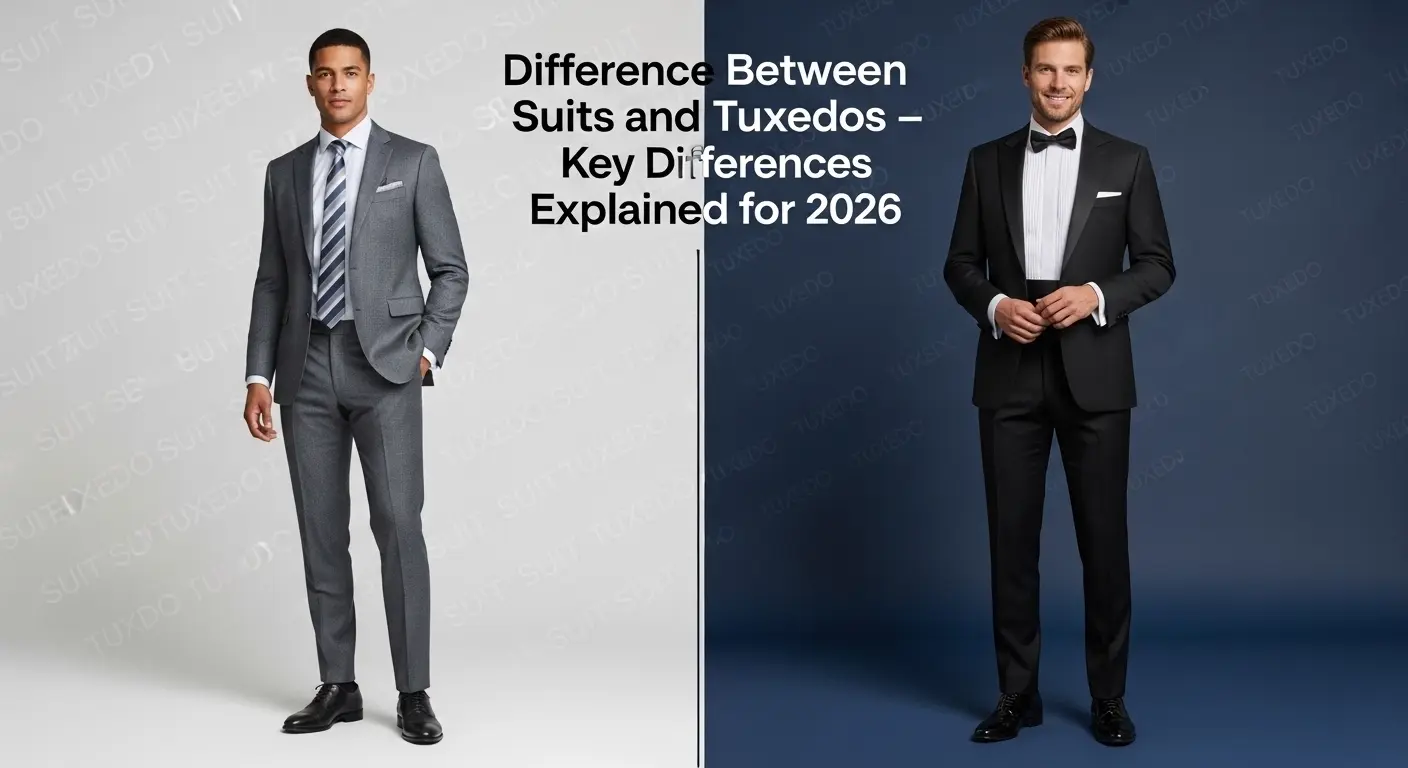
The main difference lies in formality and detailing. A tuxedo is more formal, often featuring satin elements, while a suit is more versatile and suitable for both formal and semi-formal occasions.
Why Is Their Difference Important to Know?
Understanding the difference helps individuals dress appropriately for occasions, maintain social etiquette, and express personal style. For professionals, it ensures confidence in business settings. For fashion experts, it reflects attention to detail and cultural awareness. In society, clothing often communicates respect, status, and occasion awareness making this knowledge essential.
Pronunciation
- Suit
- US: /suːt/
- UK: /suːt/
- Tuxedo
- US: /tʌkˈsiː.doʊ/
- UK: /tʌkˈsiː.dəʊ/
Difference Between Suits and Tuxedos
1. Formality Level
Suits are less formal than tuxedos.
- Example 1: A navy suit is perfect for office meetings.
- Example 2: A tuxedo is required at black-tie events.
2. Fabric Details
Tuxedos include satin on lapels, buttons, and stripes; suits do not.
- Example 1: A tuxedo lapel shines under light.
- Example 2: A suit lapel has a matte finish.
3. Shirt Style
Tuxedos are worn with formal shirts; suits allow flexibility.
- Example 1: A tuxedo shirt has pleats.
- Example 2: A suit can pair with a plain cotton shirt.
4. Accessories
Tuxedos require bow ties; suits use neckties.
- Example 1: A black bow tie completes a tuxedo look.
- Example 2: A striped tie matches a business suit.
5. Footwear
Tuxedos pair with patent leather shoes; suits allow various styles.
- Example 1: Glossy shoes suit tuxedos.
- Example 2: Loafers work with suits.
6. Occasions
Tuxedos are for formal events; suits are versatile.
- Example 1: Weddings often require tuxedos.
- Example 2: Interviews call for suits.
7. Belt vs Suspenders
Tuxedos use suspenders; suits use belts.
- Example 1: Suspenders keep tuxedo trousers neat.
- Example 2: A belt is common with suits.
8. Jacket Buttons
Tuxedos often have covered buttons; suits do not.
- Example 1: Satin-covered buttons appear on tuxedos.
- Example 2: Plastic or metal buttons are on suits.
9. Color Range
Suits come in many colors; tuxedos are usually black or midnight blue.
- Example 1: Grey suits are popular.
- Example 2: Black tuxedos dominate formal events.
10. Pocket Style
Tuxedos have minimalistic pockets; suits may have flaps.
- Example 1: A tuxedo pocket is sleek.
- Example 2: Suit pockets can have flaps for style.
Nature and Behaviour
Suit
Suits are versatile, practical, and adaptable. They fit into daily life, business settings, and semi-formal occasions.
Tuxedo
Tuxedos are elegant, exclusive, and ceremonial. They are reserved for special, formal events and carry a sense of prestige.
Why Are People Confused About Their Use?
People often confuse suits and tuxedos because both look similar at first glance. The differences are subtle like satin details or accessories which are easy to overlook. Additionally, modern fashion trends blur traditional rules, making the distinction less obvious.
Table: Difference and Similarity
| Feature | Suit | Tuxedo | Similarity |
| Formality | Semi-formal to formal | Highly formal | Both are formal wear |
| Fabric | Matte | Satin details | Made from quality fabric |
| Accessories | Tie | Bow tie | Both require coordination |
| Occasions | Work, meetings | Weddings, galas | Used for events |
| Shoes | Various | Patent leather | Formal footwear needed |
Which Is Better in What Situation?
A suit is better for everyday formal wear. It offers flexibility and comfort, making it suitable for business meetings, interviews, and social gatherings. Its adaptability allows you to mix and match shirts, ties, and shoes easily.
A tuxedo is ideal for highly formal occasions like weddings, galas, and award ceremonies. It enhances elegance and ensures you meet dress code expectations. When the event demands sophistication and tradition, a tuxedo stands out as the better choice.
Metaphors and Similes
- “He walked into the room like a tuxedo sharp and commanding.”
- “Her style was as reliable as a well-tailored suit.”
Connotative Meaning
Suit
- Positive: Professional, reliable
- Negative: Ordinary, rigid
- Neutral: Formal clothing
- Example: “He wore a suit to show professionalism.”
Tuxedo
- Positive: Elegant, prestigious
- Negative: Overly formal, expensive
- Neutral: Evening wear
- Example: “He chose a tuxedo for the grand event.”
Idioms and Proverbs
- “Suit yourself” Do as you like
- Example: “If you don’t want to come, suit yourself.”
- “All dressed up with nowhere to go”
- Example: “He wore a tuxedo but had no event completely overdressed.”
Works in Literature
- The Man in the Gray Flannel Suit (Novel, Sloan Wilson, 1955)
- The Tuxedo (Fashion essays and style literature references)
Movies
- The Tuxedo (2002, USA)
- The Suit (2020, South Africa)
FAQs:
1. Can a suit be worn to a black-tie event?
No, tuxedos are preferred for black-tie events.
2. Are tuxedos more expensive than suits?
Yes, due to premium materials and detailing.
3. Can you wear a tie with a tuxedo?
Traditionally, a bow tie is required.
4. Is a black suit the same as a tuxedo?
No, tuxedos have satin details.
5. Can suits be worn casually?
Yes, suits can be styled for semi-formal looks.
How Both Are Useful for Surroundings
Suits contribute to professionalism in workplaces and social harmony in formal settings. Tuxedos enhance ceremonial occasions, adding elegance and respect to events like weddings and galas.
Final Words for Both
Suits represent versatility and daily elegance, while tuxedos symbolize peak sophistication. Both hold unique value in fashion and social culture.
Conclusion:
Understanding the difference between suits and tuxedos is essential for anyone who wants to dress appropriately and stylishly. While suits offer flexibility and are suitable for various occasions, tuxedos are reserved for formal events that demand elegance.
Recognizing these differences not only improves your fashion sense but also ensures you respect social norms and dress codes. If you choose a suit or a tuxedo, the key lies in wearing it with confidence and purpose.

I am an English language writer and editor with over 10 years of experience in explaining confusing English words, grammar rules, and word usage differences. I specialize in making complex language topics simple, clear, and practical for everyday readers.
At diffrulee.com, I am helping learners to understand common English word differences such as spelling variations, similar meanings, and correct usage in American and British English. My writing style is reader-friendly, example-driven, and designed to improve confidence in written and spoken English.