On a Sunday afternoon, a family gathers in the kitchen while a chicken slowly cooks in the oven. Someone says, “Let’s roast it.” Another person suggests, “Why not broil it for a crispy finish?” This simple moment highlights a common kitchen confusion. Many people hear the terms roast and broil but are not always sure how they differ.
Understanding the difference between roast and broil can transform the way food is prepared. Both methods use dry heat in an oven, yet they work in different ways and produce different textures and flavors. Knowing the difference between roast and broil helps cooks choose the best technique for meat, vegetables, and other dishes.
Even professional chefs rely on this knowledge to achieve perfect results. When you understand the difference between roast and broil, you gain more control over cooking temperature, browning, and moisture.
In simple terms, learning the difference between roast and broil helps anyone cook smarter and better.
Key Difference Between the Both
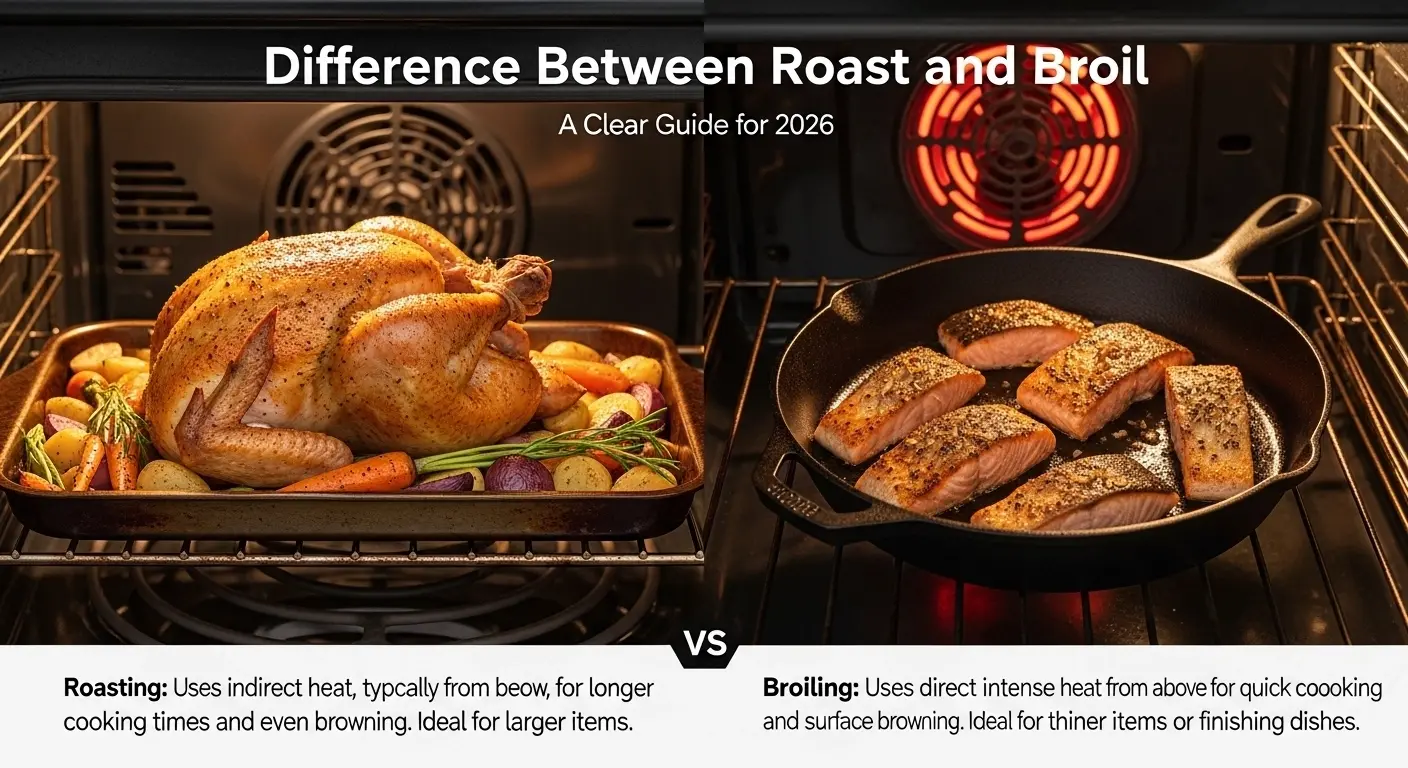
Roasting cooks food slowly with hot air surrounding it, usually at moderate temperatures. Broiling cooks food quickly using intense heat from above, similar to grilling but inside the oven.
Why Their Difference Is Necessary to Know for Learners and Experts
Understanding cooking techniques is important for both beginners and professionals. Knowing the correct method ensures food safety, improves flavor, and prevents overcooking or burning. In culinary schools and professional kitchens, mastering roasting and broiling is essential because each method suits different foods and desired textures. For society, these skills help people prepare nutritious meals efficiently and reduce food waste by cooking ingredients properly.
Pronunciation
Roast
- US: /roʊst/
- UK: /rəʊst/
Broil
- US: /brɔɪl/
- UK: /brɔɪl/
Now that we understand their basic meanings, let’s explore the detailed comparison.
Difference Between Roast and Broil
1. Heat Source Direction
Roasting uses heat that surrounds the food inside the oven. The heat comes from multiple directions.
Broiling uses heat from the top heating element only.
Examples:
- Roasting a whole chicken evenly in the oven.
- Roasting potatoes until tender.
- Broiling steak directly under high heat.
- Broiling fish fillets for quick cooking.
2. Cooking Temperature
Roasting usually happens at moderate temperatures (around 325–450°F).
Broiling uses very high temperatures (around 500–550°F).
Examples:
- Roasting turkey at 350°F for slow cooking.
- Roasting vegetables at 400°F.
- Broiling salmon at 525°F.
- Broiling garlic bread quickly.
3. Cooking Speed
Roasting is a slower cooking method.
Broiling cooks food very quickly.
Examples:
- Roasting a large roast beef for two hours.
- Roasting carrots slowly.
- Broiling shrimp in a few minutes.
- Broiling thin steak rapidly.
4. Food Position in Oven
Roasting usually places food in the middle of the oven.
Broiling requires placing food very close to the top heating element.
Examples:
- Roasting chicken on a center rack.
- Roasting vegetables on a baking tray.
- Broiling steak on the top rack.
- Broiling cheese topping on casseroles.
5. Purpose of Cooking
Roasting is used to cook food thoroughly.
Broiling is mainly used for browning or finishing.
Examples:
- Roasting lamb until tender.
- Roasting potatoes for soft interiors.
- Broiling cheese to melt and brown.
- Broiling meat to create a crust.
6. Best Food Types
Roasting is best for large cuts of meat and vegetables.
Broiling is best for thin or small cuts.
Examples:
- Roasting a turkey.
- Roasting a whole cauliflower.
- Broiling fish fillets.
- Broiling burgers.
7. Moisture Level
Roasting helps keep food moist due to slower cooking.
Broiling may dry food if left too long.
Examples:
- Roasted chicken staying juicy.
- Roasted pork retaining moisture.
- Over-broiled fish becoming dry.
- Broiled steak forming a crust.
8. Cooking Equipment
Roasting uses roasting pans or baking trays.
Broiling uses broiler pans or special racks.
Examples:
- Roasting beef in a roasting pan.
- Roasting vegetables in a baking dish.
- Broiling steak on a broiler rack.
- Broiling fish on a broiler tray.
9. Flavor Development
Roasting develops deep, caramelized flavors.
Broiling creates a smoky, grilled-like flavor.
Examples:
- Roasted garlic becoming sweet.
- Roasted vegetables tasting richer.
- Broiled steak tasting grilled.
- Broiled tomatoes getting charred edges.
10. Level of Attention Needed
Roasting requires occasional checking.
Broiling requires constant attention due to high heat.
Examples:
- Roasting a chicken and checking every 30 minutes.
- Roasting vegetables and stirring once.
- Watching steak while broiling.
- Turning fish quickly during broiling.
Nature and Behaviour of Both
Roast
Roasting is gentle and gradual. It cooks food evenly and enhances natural flavors while keeping the inside tender.
Broil
Broiling is intense and fast. It quickly browns or crisps the outer layer while cooking the inside rapidly.
Why People Are Confused About Their Use
People often confuse these terms because both methods use ovens and dry heat. Additionally, some recipes use both techniques together first roasting the food and then broiling it briefly for a crispy top. The similar cooking environment leads many cooks to assume they are the same.
Table Showing Difference and Similarity
| Feature | Roast | Broil | Similarity |
| Heat direction | Surrounding heat | Heat from above | Both use oven heat |
| Temperature | Moderate | Very high | Dry heat cooking |
| Speed | Slow | Fast | Enhance flavor |
| Best foods | Large cuts | Thin foods | Used in ovens |
| Attention needed | Less | More | Improve texture |
Which Is Better in What Situation?
Roasting
Roasting is better when cooking large cuts of meat, poultry, or vegetables that require even and slow cooking. It allows flavors to develop deeply and keeps food moist. For family meals like roast chicken, turkey, or roasted vegetables, roasting is the preferred method.
Broiling
Broiling is better when you need quick cooking or a crispy surface. Thin meats, fish, or foods with cheese toppings benefit from broiling. It is also useful for finishing dishes by adding a golden-brown crust within minutes.
Use in Metaphors and Similes
Roast
- “The comedian roasted the celebrity.”
- “He was roasted by critics.”
Broil
- “She was broiling with anger.”
- “The tension broiled under the surface.”
Connotative Meaning
Roast
- Positive: A friendly roast at a party.
- Negative: Harsh criticism.
Example: “The host roasted the guest with jokes.”
Broil
- Negative: Intense heat or anger.
Example: “He broiled in frustration during the argument.”
Idioms or Proverbs Related to the Words
Roast
- “Roast someone” tease or criticize humorously.
Example: “Friends roasted him at his birthday party.”
Broil
- “In the broil of conflict” in the heat of an argument.
Example: “They stood in the broil of the debate.”
Works in Literature
Roast
- The Roast Beef of Old England Song/poetry, Henry Fielding, 1731
Broil
- “The Broil” Poem reference in historical literature collections
Movie Names Related to the Keywords
Roast
- The Comedy Central Roast of Justin Bieber (2015, USA)
- The Comedy Central Roast of Donald Trump (2011, USA)
Broil
- Broil (2020, Canada)
FAQs:
1. Is broiling the same as grilling?
No. Broiling uses heat from above in an oven, while grilling uses heat from below on a grill.
2. Can you broil after roasting?
Yes. Many recipes roast food first and then broil briefly to add browning.
3. Which method cooks food faster?
Broiling cooks much faster because of its intense heat.
4. Is roasting healthier than broiling?
Both methods are healthy because they use dry heat without extra oil.
5. Can vegetables be broiled?
Yes. Thin vegetables like asparagus or tomatoes can be broiled quickly.
How Both Are Useful for Surroundings
Roasting and broiling help people cook nutritious food without deep frying. These methods reduce excess oil consumption and preserve natural flavors. In households and restaurants, they also save energy compared to long stovetop cooking.
Final Words for Both
Roast represents slow, flavorful cooking that brings out deep taste and tenderness.
Broil represents speed and intensity, perfect for quick meals and crispy finishes.
Conclusion:
Understanding the difference between roast and broil is essential for anyone who enjoys cooking. While both techniques use dry heat in the oven, their purpose and results are different. Roasting slowly cooks food evenly and enhances its natural flavors, making it perfect for large cuts of meat and vegetables. Broiling, on the other hand, uses intense top heat to cook food quickly and create a crispy surface.
Knowing when to roast and when to broil allows cooks to achieve better texture, flavor, and presentation. By mastering these two techniques, both beginners and professionals can improve their cooking skills and prepare meals more efficiently.

I am an English language writer and editor with over 10 years of experience in explaining confusing English words, grammar rules, and word usage differences. I specialize in making complex language topics simple, clear, and practical for everyday readers.
At diffrulee.com, I am helping learners to understand common English word differences such as spelling variations, similar meanings, and correct usage in American and British English. My writing style is reader-friendly, example-driven, and designed to improve confidence in written and spoken English.