Imagine a car owner visiting a mechanic after a minor accident. The mechanic suggests replacing a damaged part and gives two options: an OE part or an OEM part. At first glance, these terms may sound identical, and many people assume they mean the same thing. However, the difference between OE and OEM is subtle but important.
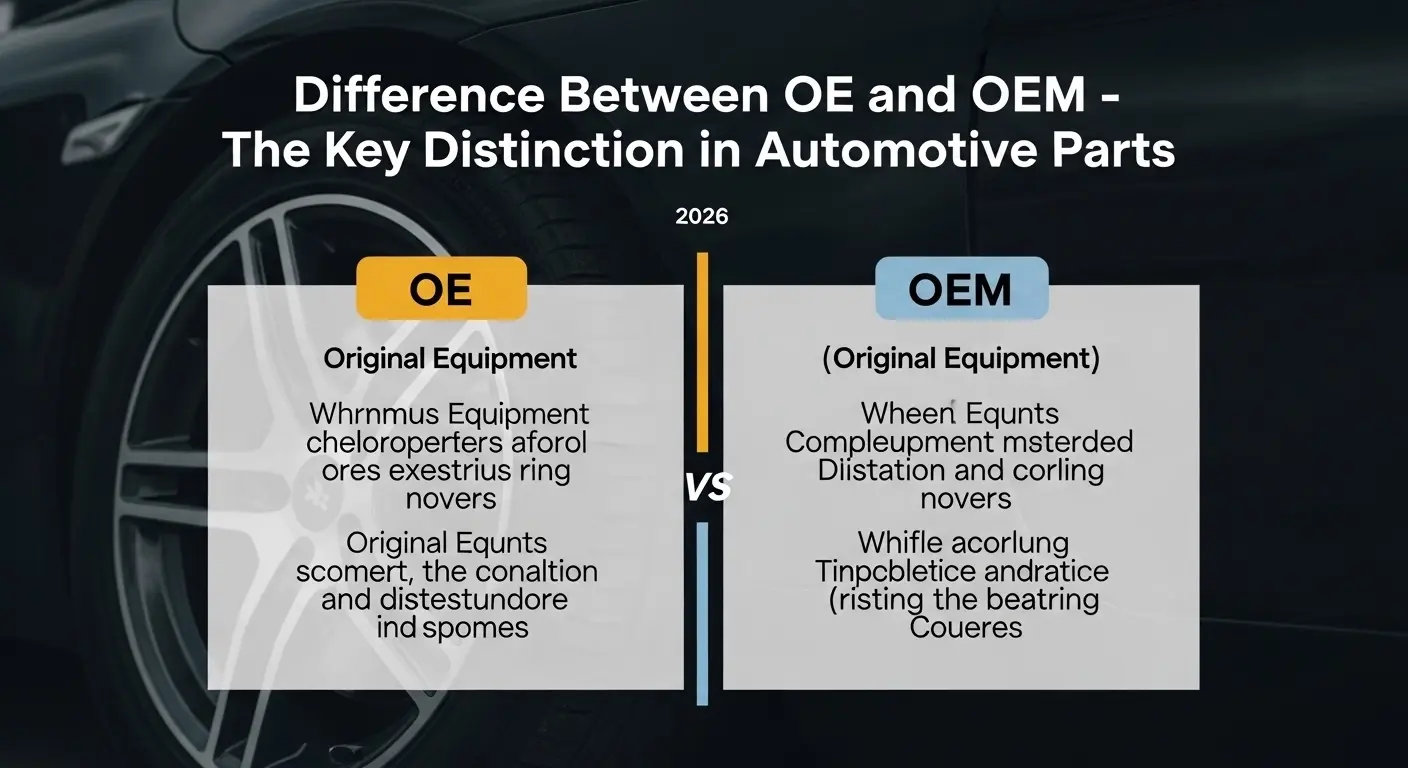
In simple terms, OE (Original Equipment) refers to the exact part that originally came installed in a vehicle when it left the factory. On the other hand, OEM (Original Equipment Manufacturer) refers to parts produced by the same manufacturer that made the original parts, but sold without the vehicle brand’s packaging. Understanding the difference between OE and OEM can help car owners, mechanics, and automotive experts make better purchasing decisions.
Many buyers mistakenly believe there is no difference between OE and OEM, which can lead to confusion when replacing car components. Knowing the difference between OE and OEM helps people choose parts based on cost, quality, and authenticity.
This knowledge is valuable not only for professionals but also for everyday vehicle owners who want reliable replacements.
Key Difference Between the Both
The fundamental difference between OE and OEM lies in branding and distribution. OE parts are sold directly by the vehicle brand and match the original factory-installed components exactly, while OEM parts are made by the same manufacturer but sold independently without the automaker’s label.
Why Is Their Difference Necessary to Know for Learners and Experts?
Understanding the difference between OE and OEM is essential in the automotive industry. For learners such as students of automotive engineering, it builds knowledge about supply chains and manufacturing. For experts like mechanics and engineers, it ensures accurate recommendations and proper vehicle maintenance.
This knowledge also protects consumers from overpaying. OE parts are often more expensive due to brand packaging, while OEM parts may offer the same quality at a lower price. In society, awareness of the difference between OE and OEM helps promote informed purchasing decisions, transparency in the repair industry, and better vehicle safety.
Pronunciation
OE
- US: /ˌoʊ ˈiː/
- UK: /ˌəʊ ˈiː/
OEM
- US: /ˌoʊ iː ˈem/
- UK: /ˌəʊ iː ˈem/
Difference Between OE and OEM
1. Definition
OE: The exact part installed in a vehicle during its original manufacturing process.
Example 1: The brake pads that come with a new car from the factory.
Example 2: The original air filter included when the vehicle was first sold.
OEM: A part made by the original manufacturer but sold separately without the vehicle brand name.
Example 1: Brake pads made by the same company but sold under the manufacturer’s brand.
Example 2: An air filter produced by the original supplier but packaged independently.
2. Branding
OE: Carries the automaker’s logo and packaging.
Example 1: A car company’s branded spark plug.
Example 2: A factory-labeled fuel pump.
OEM: Sold under the manufacturer’s brand name.
Example 1: Spark plugs sold under the supplier’s brand.
Example 2: A fuel pump sold with the manufacturer’s own label.
3. Price
OE: Usually more expensive because of brand labeling and dealership sales.
Example 1: Dealership brake pads costing higher.
Example 2: Original factory sensors sold at premium price.
OEM: Often cheaper though quality may be the same.
Example 1: Manufacturer-sold brake pads costing less.
Example 2: Identical sensors sold at a lower price.
4. Distribution
OE: Typically sold through dealerships.
Example 1: Parts purchased at a car dealership service center.
Example 2: Official brand spare parts counters.
OEM: Available through independent retailers and online stores.
Example 1: Parts sold at auto spare shops.
Example 2: Components available from manufacturer distributors.
5. Packaging
OE: Comes in vehicle brand packaging.
Example 1: Car brand logo on the box.
Example 2: Official factory labels.
OEM: Packaged under the manufacturer’s own brand.
Example 1: Supplier’s company logo on packaging.
Example 2: Neutral packaging without car brand logos.
6. Warranty
OE: Often includes official vehicle manufacturer warranty.
Example 1: Dealership-installed parts with service warranty.
Example 2: Factory-backed replacements.
OEM: Warranty usually comes from the manufacturer instead.
Example 1: Manufacturer warranty card included.
Example 2: Independent guarantee for product quality.
7. Availability
OE: Sometimes limited to dealership supply chains.
Example 1: Special engine components available only through dealers.
Example 2: Rare interior parts ordered from the company.
OEM: More widely available.
Example 1: Widely sold online.
Example 2: Available in aftermarket parts stores.
8. Cost Efficiency
OE: Higher cost but guaranteed brand authenticity.
Example 1: Expensive branded replacement mirror.
Example 2: High-priced factory headlights.
OEM: Cost-effective alternative.
Example 1: Same headlights sold by manufacturer.
Example 2: Similar mirrors sold cheaper.
9. Perception
OE: Seen as the “official” replacement part.
Example 1: Preferred for warranty repairs.
Example 2: Chosen by dealership technicians.
OEM: Seen as practical replacement option.
Example 1: Used by independent mechanics.
Example 2: Chosen by cost-conscious car owners.
10. Market Role
OE: Represents the original vehicle specification.
Example 1: Factory-installed engine components.
Example 2: Manufacturer-specified electronic parts.
OEM: Supports aftermarket replacement needs.
Example 1: Replacement filters.
Example 2: Replacement cooling fans.
Nature and Behaviour of Both
OE:
OE parts represent authenticity and exact factory specifications. Their nature is official and closely tied to the car brand. They maintain strict quality control and ensure perfect compatibility.
OEM:
OEM parts focus on manufacturing expertise. Their behavior in the market is competitive and cost-efficient, offering similar quality without the branding cost.
Why People Are Confused About Their Use
Many people assume OE and OEM mean the same thing because both originate from the same manufacturer. The confusion arises because OEM parts may look identical to OE parts. Marketing practices and lack of consumer knowledge also contribute to the misunderstanding.
Table Showing Differences and Similarities
| Aspect | OE | OEM | Similarity |
| Meaning | Original Equipment | Original Equipment Manufacturer | Both linked to original manufacturers |
| Branding | Vehicle brand label | Manufacturer label | Same production source |
| Price | Higher | Lower | Quality often similar |
| Availability | Dealerships | Retail stores | Used for replacement |
| Warranty | Automaker warranty | Manufacturer warranty | Reliable components |
Which Is Better in What Situation?
OE Parts
OE parts are better when a vehicle owner wants guaranteed compatibility and official brand backing. They are ideal for warranty repairs, luxury vehicles, or situations where authenticity matters more than cost.
OEM Parts
OEM parts are better for cost-effective maintenance. They offer nearly identical quality to OE parts but at a lower price, making them suitable for everyday repairs and older vehicles.
Use in Metaphors and Similes
Although technical terms, they can appear metaphorically:
- “His work was OE quality, flawless and original.”
- “Her ideas were like OEM parts, inspired by the original but packaged differently.”
Connotative Meaning
OE
- Positive: Authentic, reliable
- Neutral: Standard factory product
Example: “He insisted on OE parts for his car.”
OEM
- Positive: Cost-effective and reliable
- Neutral: Manufacturer-produced component
Example: “The mechanic recommended an OEM replacement.”
Idioms or Proverbs Related
Since OE and OEM are technical terms, there are no traditional idioms. However, related expressions include:
- “Original is always better.”
Example: “He believes the original is always better, so he buys OE parts.” - “Quality speaks for itself.”
Example: “The OEM component proved that quality speaks for itself.”
Works in Literature Mentioning the Terms
(These terms mainly appear in technical writing)
- Automotive Technology: Principles, Diagnosis, and Service Technical Education Book (James D. Halderman, 2012)
- Automotive Service Excellence Technical Guide (Delmar Publishers, 2010)
Movies Related to Automotive Manufacturing Themes
- Ford v Ferrari (2019, USA)
- Rush (2013, USA/UK/Germany)
- Cars (2006, USA)
FAQs:
1. Are OE and OEM parts the same?
No. OE parts are branded by the vehicle manufacturer, while OEM parts are made by the original manufacturer but sold without the car brand.
2. Are OEM parts reliable?
Yes, they are usually made by the same company that produced the original parts.
3. Why are OE parts more expensive?
They include automaker branding, packaging, and dealership distribution.
4. Can OEM parts replace OE parts?
In most cases, yes, because they are produced by the same manufacturer.
5. Which should I choose for my car?
Choose OE for brand authenticity and OEM for cost-effective maintenance.
How Both Are Useful for Surroundings
OE and OEM parts contribute to a reliable automotive ecosystem. They ensure vehicles remain safe, efficient, and functional. By providing both premium and affordable options, they help maintain transportation systems that support daily life and economic activity.
Final Words for Both
OE represents authenticity and brand trust, while OEM represents manufacturing expertise and affordability. Together, they create balance in the automotive parts market.
Conclusion:
Understanding the difference between OE and OEM is essential for anyone involved with vehicles, whether as a driver, mechanic, or automotive student. OE parts offer the exact original components used by car manufacturers, ensuring authenticity and compatibility. OEM parts, however, provide a practical alternative by offering nearly identical quality at a lower cost because they come directly from the original manufacturers.
Both options have their advantages, and the best choice depends on the situation, budget, and maintenance goals. By learning the difference between OE and OEM, consumers can make smarter decisions, avoid confusion in the automotive market, and ensure their vehicles remain safe and efficient for years to come.

I am an English content writer with more than 8 years of experience in writing about English word differences, grammar clarity, and everyday language usage. I am passionate about helping learners avoid common mistakes caused by similar-looking or confusing English words.
At diffrulee.com, I write easy-to-understand guides that explain the difference between commonly confused words, spelling variations, and correct usage with real-life examples. My content is especially useful for students, writers, and non-native English speakers who want quick, accurate, and practical answers.