A few years ago, a shopper walked into a supermarket, picked up a few items, and paid for them by simply tapping their smartphone on a payment terminal. The process took only a second. Behind this effortless moment was a technology many people hear about but rarely understand. That is where the difference between NFC and RFID becomes important. Both technologies are forms of wireless communication that allow devices to exchange information without physical contact.
Many people often wonder about the difference between NFC and RFID because both appear in everyday life contactless payments, security cards, inventory tags, and even passports.
Although they seem similar, the difference between NFC and RFID lies in their range, functionality, and applications.
Understanding the difference between NFC and RFID helps learners, developers, and everyday users know how these technologies power modern systems around us.
Key Difference Between NFC and RFID
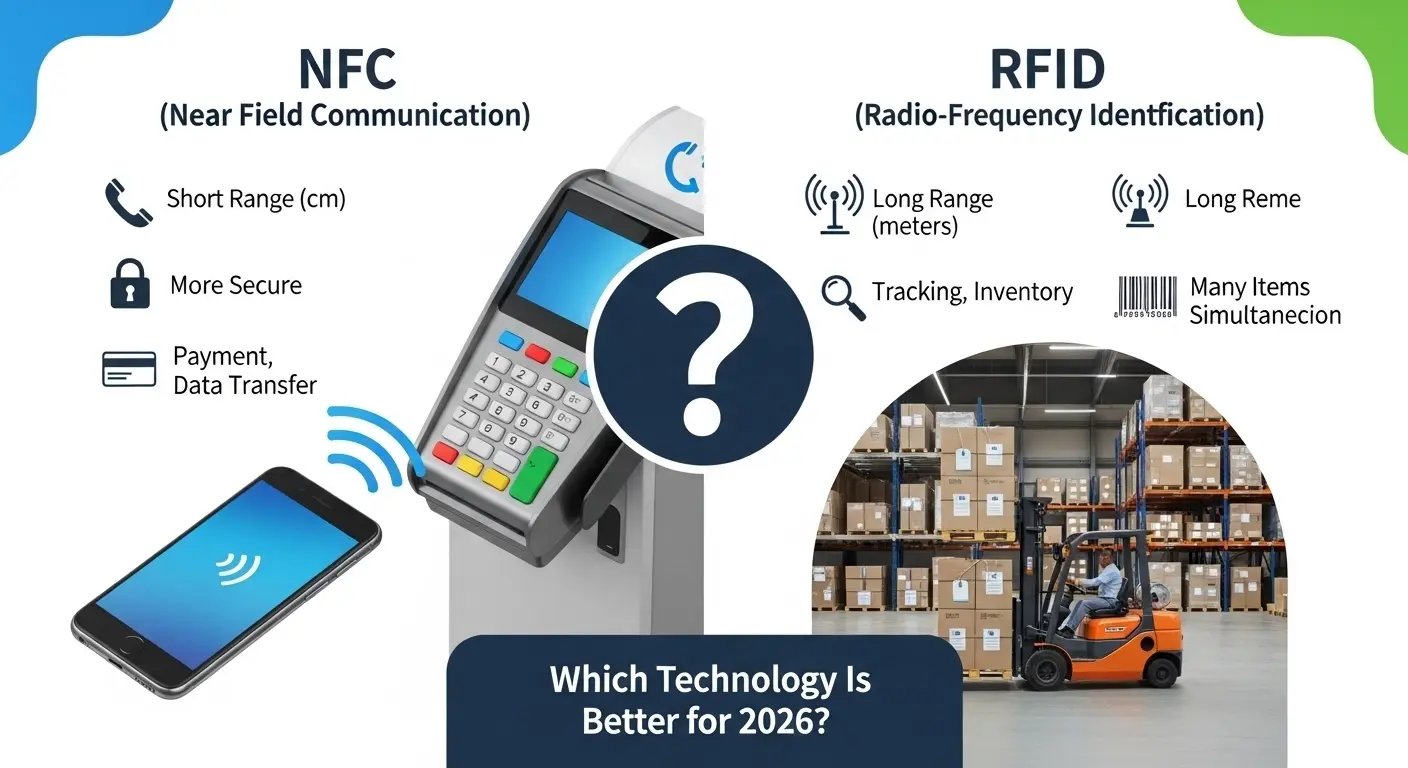
The main difference is that RFID (Radio Frequency Identification) is a broader wireless technology used to identify and track objects using radio waves, while NFC (Near Field Communication) is a specialized form of RFID designed for very short-range communication, usually within a few centimeters.
Why It Is Important to Know the Difference
Understanding the difference between NFC and RFID is essential for both beginners and experts because these technologies play an important role in modern society. RFID systems help businesses track products in warehouses, manage supply chains, and monitor inventory efficiently. NFC, on the other hand, enables convenient and secure applications like mobile payments, smart tickets, and digital access cards.
For learners, knowing the difference helps build a foundation in wireless communication technologies. For professionals and engineers, it supports better design of systems that rely on secure data exchange. In society, these technologies improve convenience, security, and efficiency in daily life.
Pronunciation
NFC
- US: /ˌɛn ɛf ˈsiː/
- UK: /ˌɛn ɛf ˈsiː/
RFID
- US: /ˌɑːr ɛf aɪ ˈdiː/
- UK: /ˌɑː ɛf aɪ ˈdiː/
Both technologies may sound similar in discussions, but their functions differ significantly. Let’s now explore the difference between NFC and RFID in detail.
Difference Between NFC and RFID
1. Definition
RFID is a technology that uses radio waves to automatically identify and track tags attached to objects.
Example 1: Retail stores attach RFID tags to clothing to track inventory.
Example 2: Libraries use RFID tags to manage books.
NFC is a short-range communication technology derived from RFID that allows two devices to exchange data when placed close together.
Example 1: Paying with a smartphone using contactless payment.
Example 2: Tapping a metro card at a ticket gate.
2. Communication Range
RFID can operate over longer distances depending on the type of tag.
Example 1: Warehouse scanners detect RFID tags several meters away.
Example 2: Toll booths read RFID tags in cars without stopping.
NFC works only within a very short distance.
Example 1: A phone must be placed near a payment terminal.
Example 2: Two smartphones must touch to share files.
3. Technology Scope
RFID is a broader technology category.
Example 1: Used in supply chain tracking.
Example 2: Used in livestock identification.
NFC is a subset of RFID technology.
Example 1: Used in mobile wallets.
Example 2: Used in smart posters that trigger phone actions.
4. Communication Type
RFID typically uses one-way communication between reader and tag.
Example 1: A scanner reads product tags in a store.
Example 2: A security gate scans RFID badges.
NFC supports two-way communication.
Example 1: Two phones exchange files.
Example 2: A smartphone communicates with a payment terminal.
5. Data Exchange Capability
RFID tags usually store limited information.
Example 1: Product serial numbers.
Example 2: Tracking IDs.
NFC allows richer data interaction.
Example 1: Digital payment authentication.
Example 2: Smart business cards sharing contact details.
6. Security Level
RFID can be less secure depending on the system.
Example 1: Simple RFID tags can be cloned.
Example 2: Some RFID systems lack encryption.
NFC is generally designed with stronger security for payments.
Example 1: Secure mobile payment verification.
Example 2: Encrypted contactless card transactions.
7. Devices Involved
RFID requires a reader and a tag.
Example 1: Warehouse scanner reading product tags.
Example 2: Library scanner reading book tags.
NFC often uses smartphones or smart devices.
Example 1: Phone tapping a payment terminal.
Example 2: Phone interacting with NFC tags.
8. Common Applications
RFID is mostly used in logistics and tracking.
Example 1: Inventory management.
Example 2: Vehicle toll systems.
NFC is used in consumer devices.
Example 1: Mobile payments.
Example 2: Contactless transit cards.
9. Cost
RFID tags can be very cheap.
Example 1: Retail tags costing only a few cents.
Example 2: Disposable tracking tags.
NFC chips are usually more expensive.
Example 1: NFC-enabled credit cards.
Example 2: Smartphones with NFC chips.
10. Ease of Use
RFID often works automatically without user interaction.
Example 1: Automatic warehouse scanning.
Example 2: Security access gates detecting tags.
NFC requires intentional interaction.
Example 1: Tapping a phone for payment.
Example 2: Tapping a card to open a door.
Nature and Behaviour of NFC and RFID
RFID behaves like a large-scale identification system designed to track objects and manage logistics efficiently. Its nature is passive and automated, often operating in the background without human interaction.
NFC, however, is interactive. It is designed for short-range, secure communication between devices. Its behaviour focuses on user-controlled actions such as tapping, sharing, or confirming transactions.
Why People Are Confused About Their Use
Many people confuse these technologies because NFC is actually based on RFID technology. Both use radio waves and similar tags or chips. Additionally, they are often used in contactless systems, such as payment cards and access badges. Because their physical appearance and usage look similar, the difference is not always obvious to users.
Table: Difference and Similarities Between NFC and RFID
| Feature | NFC | RFID |
| Technology type | Subset of RFID | Broad technology |
| Range | Few centimeters | Up to several meters |
| Communication | Two-way | Mostly one-way |
| Security | Higher | Varies |
| Devices | Smartphones & smart cards | Tags & scanners |
| Cost | Higher | Lower |
| Applications | Payments, ticketing | Tracking, logistics |
| Interaction | Requires tap | Often automatic |
| Speed | Fast short-range exchange | Fast scanning |
| Purpose | Secure interaction | Identification & tracking |
Which Is Better in What Situation?
RFID is better in situations where large numbers of objects need to be tracked automatically. For example, warehouses, retail inventory systems, and shipping companies rely on RFID to monitor thousands of items efficiently. Its longer range and low-cost tags make it ideal for large-scale identification systems.
NFC is better when secure, close-range communication is required. Mobile payments, contactless tickets, and digital identification systems benefit from NFC because it allows controlled interactions. Since the devices must be very close, NFC provides better security for personal transactions.
NFC and RFID in Metaphors and Similes
Sometimes these technologies appear metaphorically in discussions about connectivity.
Examples
- “Her phone and the terminal connected instantly, like an NFC tap.”
- “The company tracked every product like an RFID system watching inventory.”
- “Their communication was as quick as an NFC handshake.”
- “The system followed every movement like an RFID scanner.”
Connotative Meaning
NFC
Positive: convenience, speed, modern technology
Example: NFC payments make life easier.
Neutral: wireless communication method
Example: The device uses NFC to connect.
Negative: limited range
Example: NFC sometimes fails if devices are not close enough.
RFID
Positive: efficiency, automation
Example: RFID improves supply chain management.
Neutral: tracking technology
Example: RFID tags identify products.
Negative: privacy concerns
Example: Some people worry about RFID tracking.
Idioms or Proverbs Related to the Concepts
While there are no direct idioms about NFC or RFID, similar ideas appear in expressions.
“Keep in touch.”
Example: NFC devices literally keep devices in touch for communication.
“On the radar.”
Example: RFID systems keep every item on the radar of inventory tracking.
“Close enough to touch.”
Example: NFC works only when devices are close enough to touch.
Works in Literature Referencing the Concepts
(Technological references in modern writing)
- “The Internet of Things” Technology non-fiction by Samuel Greengard (2015)
- “RFID Handbook” Technical reference by Klaus Finkenzeller (2003)
- “The Age of Invisible Machines” Technology commentary by Rob van Kranenburg (2010)
Movies Referencing Similar Technologies
- Mission: Impossible – Ghost Protocol (2011, USA) Features RFID tracking concepts
- The Dark Knight (2008, USA) Shows advanced surveillance and tracking systems
- Minority Report (2002, USA) Includes futuristic identification and scanning technologies
FAQs:
1. Are NFC and RFID the same thing?
No. NFC is a specialized form of RFID technology designed for short-range communication.
2. Can smartphones use RFID?
Most smartphones primarily use NFC, which is based on RFID technology.
3. Which is more secure?
NFC is generally more secure because it works at a very short distance.
4. Where is RFID commonly used?
RFID is widely used in inventory management, logistics, and tracking systems.
5. Can NFC work without internet?
Yes. NFC communication works directly between devices without needing internet access.
How Both Are Useful for Our Surroundings
Both NFC and RFID improve modern life in different ways. RFID helps businesses track goods, reduce losses, and manage supply chains efficiently. NFC enhances daily convenience by enabling fast payments, digital tickets, and quick device connections. Together, they support smarter cities, automated systems, and a more connected digital environment.
Final Words
NFC and RFID are closely related technologies that power many invisible systems around us. While RFID focuses on large-scale tracking and automation, NFC brings secure and interactive communication to personal devices.
Conclusion:
The difference between NFC and RFID lies mainly in their purpose, range, and applications. RFID serves as a powerful technology for identifying and tracking objects over longer distances, making it ideal for logistics and inventory systems. NFC, on the other hand, is designed for secure short-range communication between devices such as smartphones and payment terminals.
Understanding the difference between these technologies helps people appreciate the systems behind contactless payments, smart cards, and automated tracking. As technology continues to evolve, both NFC and RFID will remain essential tools for building faster, safer, and more efficient digital environments.

I am an English content writer with more than 8 years of experience in writing about English word differences, grammar clarity, and everyday language usage. I am passionate about helping learners avoid common mistakes caused by similar-looking or confusing English words.
At diffrulee.com, I write easy-to-understand guides that explain the difference between commonly confused words, spelling variations, and correct usage with real-life examples. My content is especially useful for students, writers, and non-native English speakers who want quick, accurate, and practical answers.