Imagine a child born in one country, raised in another, and later granted legal rights in a third. When asked where they belong, the answer may not be simple. This is where the difference between nationality and citizenship becomes important. In everyday conversation, people often use these terms interchangeably, but they actually have distinct meanings.
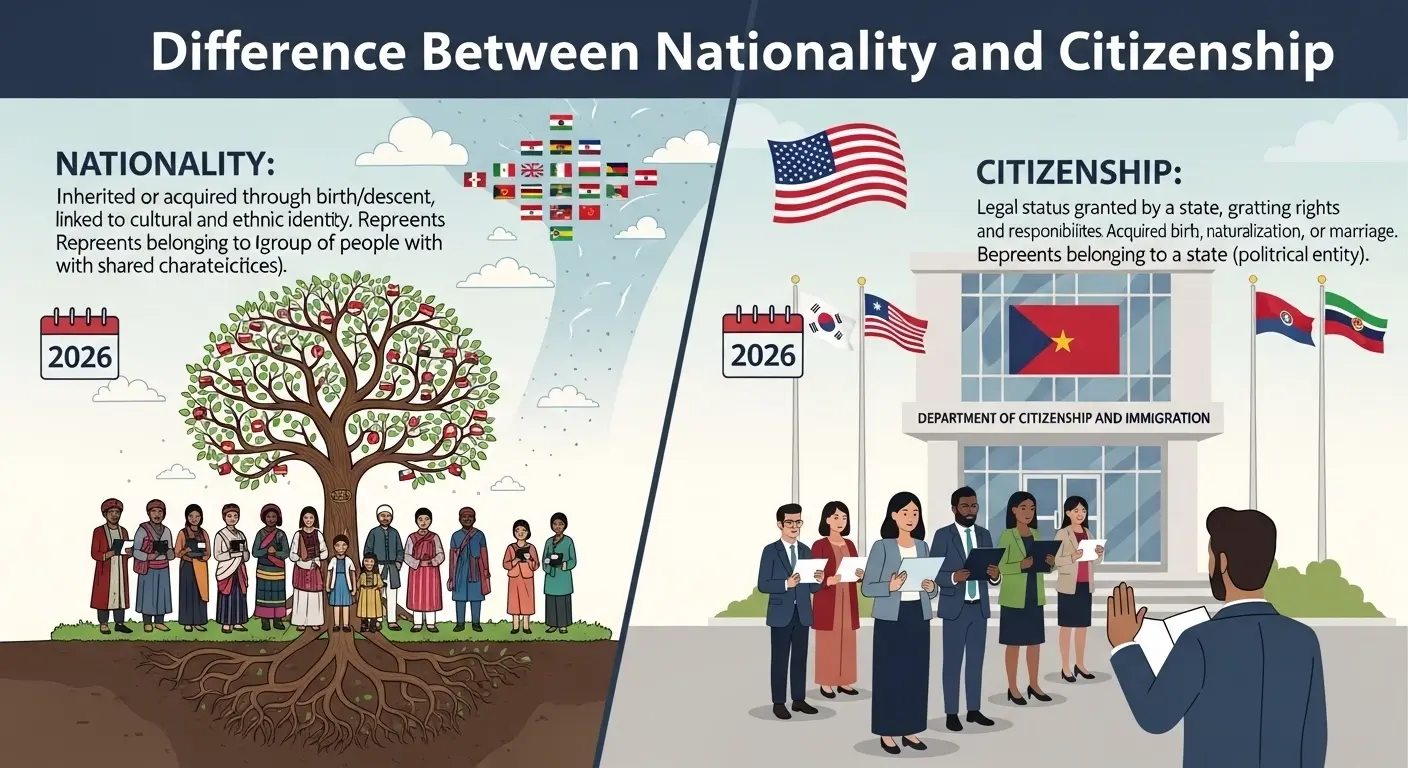
Nationality usually refers to a person’s origin, heritage, or emotional connection to a nation, while citizenship is a legal status granted by a state.
Understanding the difference between nationality and citizenship helps avoid confusion in legal, social, and cultural contexts. Many people search for the difference between nationality and citizenship when dealing with passports, immigration, or identity.
In reality, the difference between nationality and citizenship shapes how individuals are recognized globally and treated under the law.
Key Difference Between Nationality and Citizenship
The main difference lies in identity vs legal status:
- Nationality is about belonging to a nation culturally or by birth.
- Citizenship is a legal relationship with a country that grants rights and responsibilities.
Why Is Their Difference Important for Learners and Experts?
Understanding the difference is essential for both beginners and professionals. For learners, it helps build clear language and avoid misuse in writing or speaking. For experts—such as lawyers, policymakers, and educators it is crucial for interpreting laws, migration policies, and international relations.
In society, nationality shapes identity, culture, and emotional belonging, while citizenship determines voting rights, legal protections, and duties. Knowing their difference ensures fairness, clarity, and informed decision-making in global communities.
Pronunciation (US & UK)
- Nationality
- US: /ˌnæʃəˈnæləti/
- UK: /ˌnæʃəˈnælɪti/
- Citizenship
- US: /ˈsɪtɪzənʃɪp/
- UK: /ˈsɪtɪzənʃɪp/
Difference Between Nationality and Citizenship
1. Definition
- Nationality refers to a person’s origin or ethnic background.
- Example 1: Ali has Pakistani nationality by birth.
- Example 2: Maria identifies with her Spanish nationality.
- Citizenship refers to legal membership in a state.
- Example 1: John became a Canadian citizen after migration.
- Example 2: Sara holds UK citizenship through naturalization.
2. Nature
- Nationality is emotional and cultural.
- Example 1: People celebrate traditions linked to nationality.
- Example 2: Language often reflects nationality.
- Citizenship is legal and political.
- Example 1: Citizens can vote in elections.
- Example 2: Citizenship grants legal protection.
3. Basis
- Nationality is based on birth or ancestry.
- Example 1: A child inherits nationality from parents.
- Example 2: Ethnic roots define nationality.
- Citizenship is based on law.
- Example 1: Naturalization grants citizenship.
- Example 2: Governments approve citizenship applications.
4. Changeability
- Nationality is difficult to change.
- Example 1: Cultural identity remains strong.
- Example 2: Heritage cannot easily be replaced.
- Citizenship can change.
- Example 1: A person can gain dual citizenship.
- Example 2: Citizenship can be revoked in some cases.
5. Scope
- Nationality relates to identity.
- Example 1: Festivals show national identity.
- Example 2: Clothing reflects nationality.
- Citizenship relates to rights.
- Example 1: Citizens access public services.
- Example 2: Citizens follow laws.
6. Legal Rights
- Nationality does not always give rights.
- Example 1: Stateless people may lack rights.
- Example 2: Nationality alone doesn’t allow voting.
- Citizenship ensures rights.
- Example 1: Citizens can vote.
- Example 2: Citizens can hold public office.
7. Recognition
- Nationality is socially recognized.
- Example 1: Cultural groups identify nationality.
- Example 2: Traditions define nationality.
- Citizenship is legally recognized.
- Example 1: Passports show citizenship.
- Example 2: Legal documents confirm citizenship.
8. Emotional Connection
- Nationality creates belonging.
- Example 1: Pride in national heritage.
- Example 2: Attachment to homeland.
- Citizenship creates responsibility.
- Example 1: Paying taxes.
- Example 2: Following laws.
9. International Role
- Nationality identifies origin globally.
- Example 1: Athletes represent nationality.
- Example 2: Culture spreads through nationality.
- Citizenship determines legal status abroad.
- Example 1: Embassies help citizens.
- Example 2: Travel depends on citizenship.
10. Documentation
- Nationality is often informal or implied.
- Example 1: Mentioned in identity forms.
- Example 2: Seen in cultural identity.
- Citizenship is documented.
- Example 1: Passports show citizenship.
- Example 2: Certificates prove citizenship.
Nature and Behaviour
- Nationality: Emotional, cultural, identity-based, and deeply rooted in heritage.
- Citizenship: Legal, formal, rule-based, and governed by state laws.
Why Are People Confused?
People confuse these terms because they often overlap. Many countries use them interchangeably in daily language. Also, passports and official forms sometimes blur the distinction, making it harder for individuals to understand the difference clearly.
Table: Difference and Similarity
| Aspect | Nationality | Citizenship | Similarity |
| Meaning | Cultural identity | Legal status | Both relate to belonging |
| Basis | Birth/heritage | Law | Both linked to a country |
| Nature | Emotional | Legal | Both shape identity |
| Rights | Limited | Full rights | Both affect status |
| Change | Rare | Possible | Both can coexist |
Which Is Better in What Situation?
Nationality is more important when discussing identity, culture, and heritage. It helps people connect with their roots and traditions. In social and cultural contexts, nationality plays a stronger role in shaping who we are.
Citizenship is better in legal and political situations. It determines rights, responsibilities, and protections. For example, when voting, traveling, or accessing government services, citizenship becomes more important than nationality.
Metaphors and Similes
- Nationality is like roots of a tree (deep and natural).
- Citizenship is like a legal contract (formal and binding).
Connotative Meaning
- Nationality: Mostly positive (identity, pride)
- Example: She proudly shared her nationality.
- Citizenship: Neutral to positive (duty, rights)
- Example: Citizenship comes with responsibility.
Idioms / Proverbs
- “A man without a country is like a ship without a sail.”
- Example: Without nationality, he felt lost.
- “Rights come with responsibilities.”
- Example: Citizenship gives rights but demands duties.
Works in Literature
- Imagined Communities Political theory, Benedict Anderson, 1983
- The Rights of Man Philosophy, Thomas Paine, 1791
Movies Related to the Theme
- The Terminal (2004, USA)
- Brooklyn (2015, UK/USA)
FAQs:
1. Are nationality and citizenship the same?
No, nationality is identity, while citizenship is legal status.
2. Can a person have multiple citizenships?
Yes, many countries allow dual citizenship.
3. Can nationality change?
It rarely changes because it is tied to heritage.
4. Which is more important legally?
Citizenship is more important legally.
5. Why do forms ask for both?
Because they serve different purposes identity and legal status.
How Both Are Useful for Surroundings
Nationality promotes cultural diversity and unity, while citizenship ensures order, rights, and responsibilities in society. Together, they create balanced communities.
Final Words
Nationality shapes who you are; citizenship defines your role in society. Both are essential for identity and participation in the modern world.
Conclusion:
The difference between nationality and citizenship is simple yet significant. Nationality connects individuals to their roots, culture, and identity, while citizenship provides legal recognition, rights, and responsibilities. Although they often overlap, understanding their distinction helps in legal matters, education, and global interaction.
In today’s interconnected world, both concepts play a vital role in shaping individuals and societies. Knowing the difference between nationality and citizenship empowers people to navigate identity and law with clarity and confidence.

I am an English language writer and editor with over 10 years of experience in explaining confusing English words, grammar rules, and word usage differences. I specialize in making complex language topics simple, clear, and practical for everyday readers.
At diffrulee.com, I am helping learners to understand common English word differences such as spelling variations, similar meanings, and correct usage in American and British English. My writing style is reader-friendly, example-driven, and designed to improve confidence in written and spoken English.