Imagine walking into your kitchen early in the morning, ready to spread something sweet on warm toast. You open the jar and wonder should you choose jelly or preserves? This simple moment reflects a common confusion people face daily. The difference between jelly and preserves may seem small, but it plays a big role in taste, texture, and usage.
The difference between jelly and preserves lies in how they are made and how they feel on your palate. While both come from fruits, their preparation methods create distinct results.
Many people use these terms interchangeably, but understanding the difference between jelly and preserves helps you make better culinary choices.
If you’re a home cook or a food enthusiast, knowing the difference between jelly and preserves enhances your appreciation of food and improves your kitchen skills.
Key Difference Between Jelly and Preserves
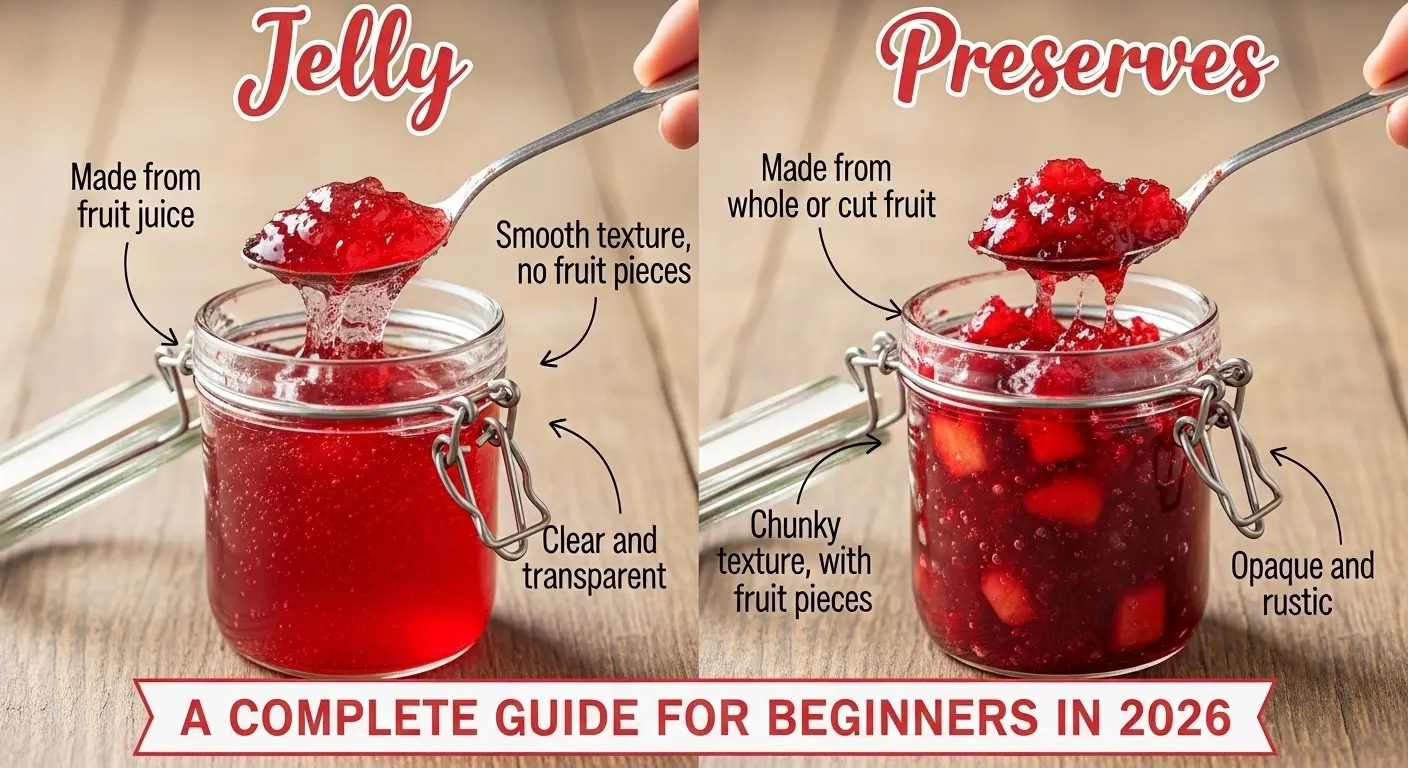
The main difference is texture and fruit content. Jelly is smooth and clear, made from fruit juice, while preserves contain whole fruit pieces or chunks, making them thicker and more textured.
Why Is Their Difference Important to Know?
Understanding the difference is important for both learners and experts. For beginners, it improves cooking accuracy and food selection. For professionals like chefs or bakers, it ensures the right ingredient is used for the desired texture and flavor. In society, food labeling, dietary preferences, and culinary traditions rely on these distinctions. Knowing what you’re consuming or serving reflects awareness and expertise in food culture.
Pronunciation (US & UK)
- Jelly
- US: /ˈdʒɛli/
- UK: /ˈdʒɛli/
- Preserves
- US: /prɪˈzɜːrvz/
- UK: /prɪˈzɜːvz/
Difference Between Jelly and Preserves
1. Ingredient Form
- Jelly: Made from fruit juice only
- Example 1: Apple juice jelly
- Example 2: Grape juice jelly
- Preserves: Made from whole fruits or chunks
- Example 1: Strawberry preserves with pieces
- Example 2: Peach preserves with slices
2. Texture
- Jelly: Smooth and firm
- Example 1: Spread evenly on bread
- Example 2: Holds shape when cut
- Preserves: Chunky and thick
- Example 1: Contains fruit bits
- Example 2: Uneven spread
3. Appearance
- Jelly: Clear and shiny
- Example 1: Transparent grape jelly
- Example 2: Glossy apple jelly
- Preserves: Opaque with fruit pieces
- Example 1: Visible berries
- Example 2: Thick fruit mixture
4. Preparation Method
- Jelly: Strained to remove solids
- Example 1: Juice filtered through cloth
- Example 2: No pulp remains
- Preserves: Cooked with fruit intact
- Example 1: Fruit boiled with sugar
- Example 2: Minimal filtering
5. Taste
- Jelly: Light and uniform flavor
- Example 1: Mild grape taste
- Example 2: Consistent sweetness
- Preserves: Rich and intense flavor
- Example 1: Strong strawberry taste
- Example 2: Natural fruit bursts
6. Spreadability
- Jelly: Easy and smooth spreading
- Example 1: Ideal for sandwiches
- Example 2: Even coating
- Preserves: Thick and sometimes uneven
- Example 1: Requires more effort
- Example 2: Leaves fruit chunks
7. Cooking Use
- Jelly: Used in glazing
- Example 1: Cake topping
- Example 2: Meat glaze
- Preserves: Used in baking and fillings
- Example 1: Pie filling
- Example 2: Pastry stuffing
8. Shelf Life
- Jelly: Longer shelf life
- Example 1: Less spoilage
- Example 2: Fewer solids
- Preserves: Slightly shorter shelf life
- Example 1: Fruit pieces spoil faster
- Example 2: Needs careful storage
9. Nutritional Content
- Jelly: Lower fiber
- Example 1: No fruit pulp
- Example 2: Mostly sugar and juice
- Preserves: Higher fiber
- Example 1: Contains fruit chunks
- Example 2: More natural nutrients
10. Usage Preference
- Jelly: Preferred for smooth texture lovers
- Example 1: Kids prefer jelly sandwiches
- Example 2: Ideal for neat presentation
- Preserves: Preferred for natural feel
- Example 1: Adults enjoy texture
- Example 2: Gourmet dishes
Nature and Behaviour
- Jelly: Smooth, refined, and consistent
- Preserves: Natural, textured, and rich
Why Are People Confused?
People confuse them because both are fruit-based spreads and look similar in jars. Marketing labels and lack of awareness also contribute to misunderstanding.
Comparison Table
| Feature | Jelly | Preserves | Similarity |
| Base | Fruit juice | Whole fruit | Both fruit-based |
| Texture | Smooth | Chunky | Spreadable |
| Appearance | Clear | Opaque | Sweet |
| Taste | Mild | Rich | Fruity |
| Use | Glazing | Baking | Breakfast spreads |
Which Is Better in What Situation?
Jelly:
Jelly is better when you need a smooth and clean texture. It is ideal for sandwiches, glazes, and desserts where appearance matters. Its consistency makes it perfect for even spreading.
Preserves:
Preserves are better when you want a rich, homemade feel. They are excellent for baking, toppings, and recipes where fruit texture enhances the dish.
Metaphors and Similes
- Jelly: “Smooth as jelly” (meaning easy and soft)
- Preserves: “Rich like preserves” (meaning full and abundant)
Connotative Meaning
- Jelly: Neutral to positive
- Example: “His plan was smooth like jelly.”
- Preserves: Positive
- Example: “Her cooking is rich like preserves.”
Idioms or Proverbs
(No direct idioms, but creative usage)
- “Spread it like jelly” → Do something easily
- “Save it like preserves” → Keep something valuable
- Example: “He saved his memories like preserves.”
Works in Literature
- “Blue Jelly” Poetry, Sandra Cisneros, 1991
- “Preserving Summer” Non-fiction, Kevin West, 2013
Movies Related
- “Jellyfish Eyes” 2013, Japan
- “The Preserving Machine” Inspired concept, USA
FAQs:
1. Is jelly healthier than preserves?
No, preserves are healthier due to fruit content.
2. Can I substitute jelly for preserves?
Yes, but texture and taste will differ.
3. Why is jelly clear?
Because it is made from filtered fruit juice.
4. Do preserves contain real fruit?
Yes, they include whole or chopped fruit.
5. Which is better for baking?
Preserves are better due to their thickness.
How Both Are Useful for Surroundings
Both jelly and preserves reduce food waste by preserving fruits. They also support local agriculture and promote homemade food culture.
Final Words
Jelly offers simplicity and smoothness, while preserves bring richness and authenticity. Both have unique roles in cooking and daily life.
Conclusion:
In conclusion, the difference between jelly and preserves goes beyond texture it reflects how food is processed and enjoyed. Jelly is smooth, refined, and ideal for clean spreads, while preserves are rich, chunky, and full of natural fruit goodness.
Understanding their differences helps you choose the right option for your needs, If for taste, health, or cooking purposes. By learning these distinctions, you not only improve your culinary knowledge but also make more informed food choices in everyday life.

I am an English content writer with more than 8 years of experience in writing about English word differences, grammar clarity, and everyday language usage. I am passionate about helping learners avoid common mistakes caused by similar-looking or confusing English words.
At diffrulee.com, I write easy-to-understand guides that explain the difference between commonly confused words, spelling variations, and correct usage with real-life examples. My content is especially useful for students, writers, and non-native English speakers who want quick, accurate, and practical answers.