Imagine a person recovering from a sports injury while another struggles with chronic back pain. Both visit a physiotherapy clinic and are treated using small electrical devices attached to their skin. One device helps strengthen weakened muscles, while the other mainly reduces pain signals going to the brain. Although the machines look similar, they work differently. This is where understanding the difference between EMS and TENS becomes important.
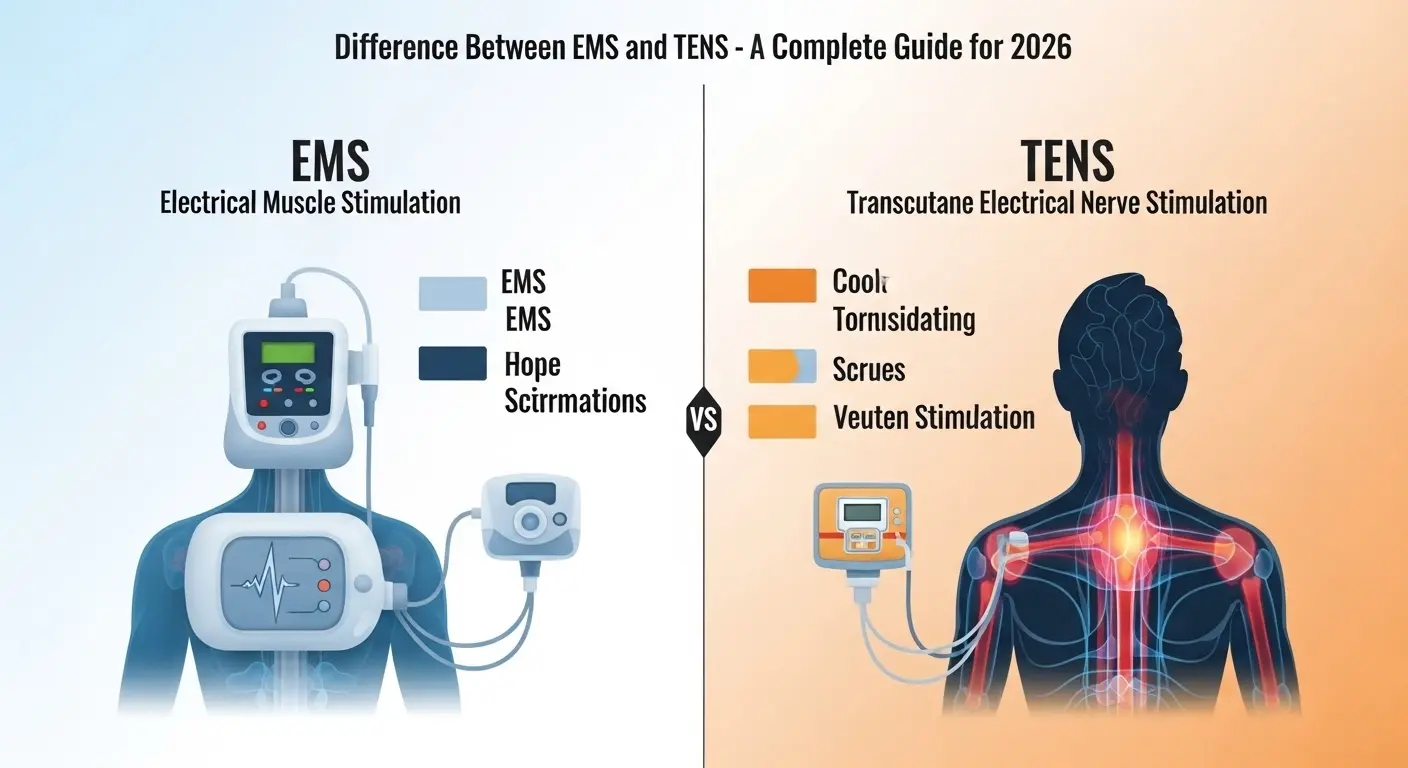
EMS (Electrical Muscle Stimulation) and TENS (Transcutaneous Electrical Nerve Stimulation) are common electrotherapy techniques used in rehabilitation and pain management. Many patients and even learners in medical or fitness fields often search for the difference between EMS and TENS because the terms appear similar but serve distinct purposes.
Knowing the difference between EMS and TENS helps patients choose the correct treatment and allows professionals to apply therapy more effectively. In healthcare, fitness training, and physiotherapy clinics worldwide, understanding the difference between EMS and TENS ensures better treatment outcomes.
Before diving deeper, let’s first understand how these two terms are pronounced.
Pronunciation of Both Terms
EMS (Electrical Muscle Stimulation)
- US: /ˌiː ɛm ˈɛs/
- UK: /ˌiː ɛm ˈɛs/
TENS (Transcutaneous Electrical Nerve Stimulation)
- US: /tɛnz/
- UK: /tɛnz/
Both words may sound technical, but their applications are very practical in modern medicine and rehabilitation.
To fully understand their roles, we now explore the detailed difference between EMS and TENS.
Difference Between EMS and TENS
1. Purpose of Treatment
EMS is mainly used to stimulate muscles to contract and strengthen them. It helps in rehabilitation and muscle training.
TENS is designed primarily to reduce pain by blocking pain signals to the brain.
Examples
- EMS helps rebuild muscles after surgery.
- EMS is used by athletes to improve muscle performance.
- TENS reduces chronic back pain.
- TENS helps relieve arthritis pain.
2. Target Area
EMS targets the muscles directly. It causes muscles to contract and relax repeatedly.
TENS targets nerves rather than muscles.
Examples
- EMS stimulates leg muscles after injury.
- EMS strengthens abdominal muscles during therapy.
- TENS stimulates nerves in the lower back.
- TENS targets nerve endings near painful joints.
3. Type of Electrical Signal
EMS sends strong electrical impulses that cause visible muscle contractions.
TENS sends mild electrical pulses designed to interrupt pain signals.
Examples
- EMS pulses make muscles visibly move.
- EMS pulses simulate natural muscle movement.
- TENS pulses feel like tingling.
- TENS pulses create a gentle buzzing sensation.
4. Medical Use
EMS is widely used in physiotherapy and sports training.
TENS is mostly used for pain relief therapy.
Examples
- EMS helps patients regain muscle strength after stroke.
- EMS assists rehabilitation after knee surgery.
- TENS helps patients with chronic pain conditions.
- TENS is used for migraine or nerve pain.
5. Effect on Muscles
EMS causes muscles to contract actively.
TENS usually does not cause strong muscle contractions.
Examples
- EMS strengthens weakened muscles.
- EMS prevents muscle atrophy.
- TENS mainly relaxes the affected area.
- TENS helps muscles feel less painful.
6. Use in Fitness
EMS is sometimes used for muscle training and toning.
TENS is rarely used for fitness purposes.
Examples
- EMS is used in muscle toning programs.
- EMS is used by bodybuilders for recovery.
- TENS helps relieve soreness after workouts.
- TENS reduces muscle pain after exercise.
7. Intensity Level
EMS generally uses higher intensity electrical signals.
TENS uses lower intensity signals.
Examples
- EMS intensity increases to stimulate contractions.
- EMS intensity varies depending on muscle size.
- TENS intensity stays gentle.
- TENS intensity is adjusted for comfort.
8. Sensation During Treatment
EMS feels like muscle tightening or contracting.
TENS feels like a light tingling or buzzing.
Examples
- EMS feels like a workout for the muscles.
- EMS can feel strong but controlled.
- TENS feels relaxing.
- TENS produces mild vibration sensations.
9. Application Area
People often use EMS on large muscle groups.
People often use TENS on painful areas or nerve paths.
Examples
- EMS is applied on thighs or arms.
- EMS is used on abdominal muscles.
- TENS is applied to the lower back.
- TENS is applied near shoulder pain areas.
10. Treatment Goals
EMS aims to strengthen and rehabilitate muscles.
TENS aims to reduce pain and discomfort.
Examples
- EMS helps restore muscle function.
- EMS improves muscle endurance.
- TENS reduces nerve pain.
- TENS provides temporary pain relief.
Nature and Behaviour of Both
EMS
EMS behaves like a muscle trainer. It actively stimulates muscles, forcing them to contract and relax. It is dynamic and focuses on physical muscle development and rehabilitation.
TENS
TENS behaves like a pain-relief system. Instead of activating muscles, it interferes with nerve signals so that the brain receives fewer pain messages.
Why People Are Confused About Their Use
People are confused because both EMS and TENS devices look very similar. They both use electrodes attached to the skin and deliver electrical impulses. Additionally, many therapy machines combine both EMS and TENS functions, which increases confusion. The names also sound technical and similar, making it difficult for beginners to distinguish them.
Table Showing Differences and Similarities
| Feature | EMS | TENS | Similarity |
| Full Form | Electrical Muscle Stimulation | Transcutaneous Electrical Nerve Stimulation | Both are electrotherapy |
| Main Purpose | Muscle strengthening | Pain relief | Both use electrical impulses |
| Target | Muscles | Nerves | Applied on skin with electrodes |
| Sensation | Muscle contraction | Tingling sensation | Adjustable intensity |
| Common Use | Physiotherapy, fitness | Pain management | Used in medical therapy |
Which Is Better in What Situation?
EMS
EMS is better when the goal is muscle strengthening, rehabilitation, or preventing muscle loss. It is especially useful after surgery, injuries, or long periods of inactivity. Athletes and physiotherapists often use EMS to improve muscle performance and recovery.
TENS
TENS is better when the primary problem is pain. Patients suffering from chronic back pain, arthritis, or nerve pain often benefit from TENS therapy. People commonly use it as a non-drug method of pain relief.
Use in Metaphors and Similes
Although these are technical terms, they can appear metaphorically.
Examples
- “The motivational speech acted like EMS for the team, stimulating their energy.”
- “Her calming words were like TENS therapy, easing everyone’s stress.”
Connotative Meaning
EMS
- Connotation: Positive or Neutral
- Often linked with strength, recovery, and performance.
Example: “The training program was EMS for his weak confidence.”
TENS
- Connotation: Positive or Neutral
- Associated with relief, comfort, and healing.
Example: “Music worked like TENS for his stressful mind.”
Idioms or Proverbs Related to the Concept
While no idioms directly use these words, related expressions exist.
“No pain, no gain.”
Example: Athletes using EMS often remember that “no pain, no gain” during training.
“Ease the pain.”
Example: TENS therapy literally helps to ease the pain.
Works in Literature Mentioning the Concepts
- Electrotherapy Explained Medical Guide, Val Robertson, 2009
- Therapeutic Modalities for Physical Therapists Medical textbook, William Prentice, 2014
- Principles of Rehabilitation Medicine Medical literature, 2017
Movies or Documentaries Related to These Technologies
- Pain Management Documentary USA, 2018
- The Science of Recovery UK, 2020
- Human Body: Pushing the Limits USA, 2008
FAQs:
1. What is the main difference between EMS and TENS?
EMS stimulates muscles to contract, while TENS blocks pain signals in nerves.
2. Can EMS and TENS be used together?
Yes, some therapy devices combine both functions for muscle training and pain relief.
3. Is EMS painful?
EMS may feel intense because it causes muscle contractions, but it should not be painful.
4. Is TENS safe for daily use?
Yes, TENS is generally safe when used according to medical guidelines.
5. Do athletes use EMS?
Yes, many athletes use EMS to improve muscle recovery and performance.
How Both Are Useful for Surroundings
EMS and TENS contribute to healthier communities by improving rehabilitation treatments and reducing reliance on pain medications. They help patients recover faster, allow athletes to maintain performance, and support people living with chronic pain. These technologies also promote non-invasive healthcare solutions.
Final Words for Both
EMS represents strength, recovery, and muscle activation. TENS represents comfort, relief, and pain control. Both technologies play essential roles in modern therapy.
Conclusion:
Understanding the difference between EMS and TENS is essential for patients, healthcare professionals, and fitness enthusiasts. While both therapies use electrical impulses applied through the skin, their purposes are quite different. EMS focuses on stimulating muscles to improve strength and rehabilitation, whereas TENS focuses on reducing pain by influencing nerve signals.
Each technology has unique benefits depending on the treatment goal. When used correctly, both EMS and TENS contribute significantly to modern healthcare by providing safe, effective, and non-invasive therapy options for millions of people worldwide.

I am an English content writer with more than 8 years of experience in writing about English word differences, grammar clarity, and everyday language usage. I am passionate about helping learners avoid common mistakes caused by similar-looking or confusing English words.
At diffrulee.com, I write easy-to-understand guides that explain the difference between commonly confused words, spelling variations, and correct usage with real-life examples. My content is especially useful for students, writers, and non-native English speakers who want quick, accurate, and practical answers.