Imagine you receive a secret message from a friend written in symbols. First, you try to understand it that’s decoding. Later, you reply by turning your thoughts into symbols again that’s encoding.
This simple exchange reflects the difference between decoding and encoding in everyday life. If we speak, read, write, or even use emojis, we constantly rely on these two processes. The difference between decoding and encoding is essential in communication, education, and technology.
Understanding the difference between decoding and encoding helps us become better learners and communicators.
In fact, the difference between decoding and encoding shapes how we interpret messages and express ideas clearly in both personal and professional settings.
Key Difference Between the Both
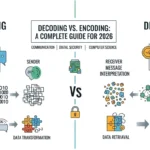
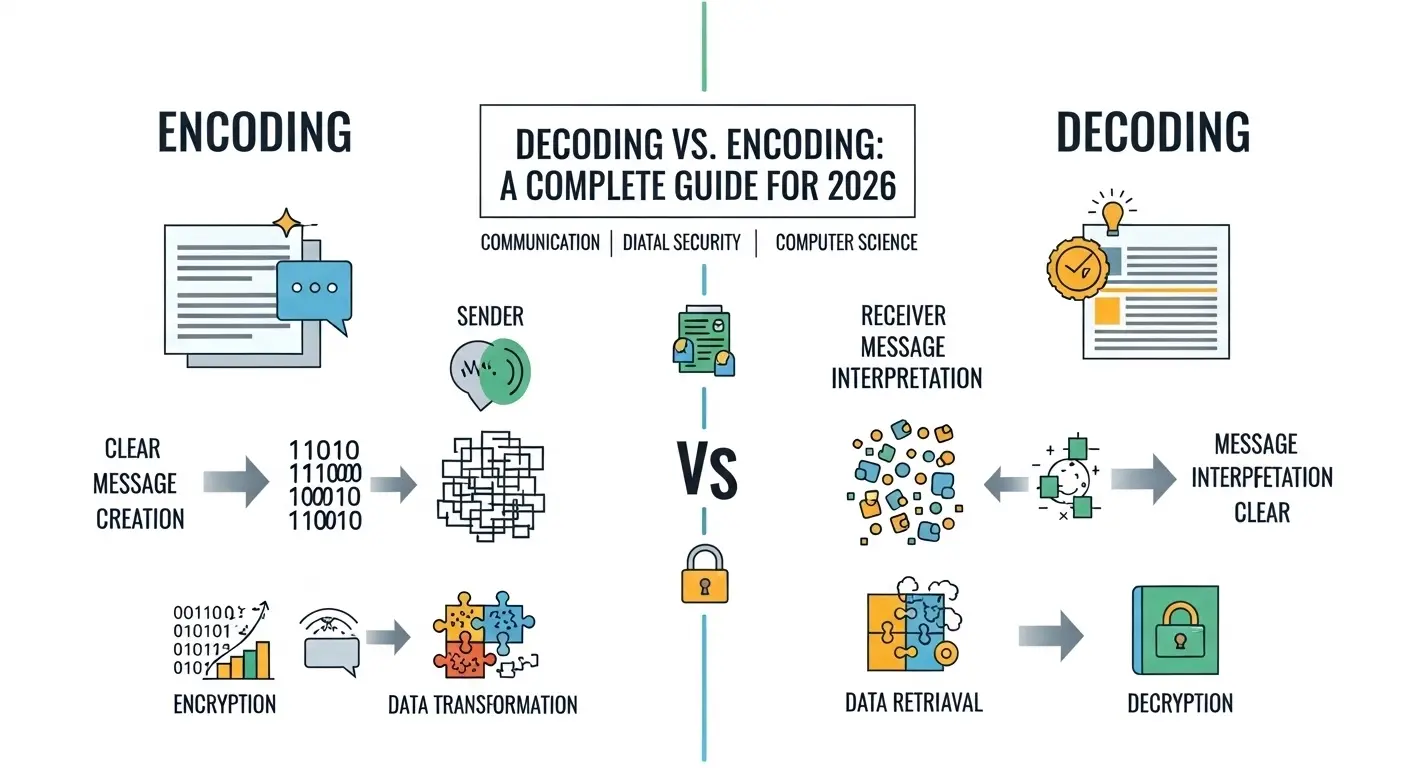
The core difference is simple: encoding is the process of creating or converting information into a message, while decoding is the process of interpreting or understanding that message.
Why Is Their Difference Necessary to Know for Learners and Experts?
Understanding encoding and decoding is crucial because they form the foundation of communication systems. For learners, it improves reading, writing, and comprehension skills. For experts such as linguists, programmers, and psychologists it helps in analyzing language, designing communication systems, and improving human interaction.
In society, these processes ensure that ideas are accurately shared and understood, reducing misunderstandings and enhancing collaboration in education, media, and technology.
Pronunciation (US & UK)
- Encoding
- US: /ɪnˈkoʊ.dɪŋ/
- UK: /ɪnˈkəʊ.dɪŋ/
- Decoding
- US: /diːˈkoʊ.dɪŋ/
- UK: /diːˈkəʊ.dɪŋ/
Difference Between Decoding and Encoding
1. Definition
- Encoding: Converting thoughts into symbols or language.
- Example 1: Writing a letter to a friend.
- Example 2: Sending a coded message.
- Decoding: Interpreting symbols into meaningful ideas.
- Example 1: Reading a letter.
- Example 2: Solving a cipher.
2. Direction of Communication
- Encoding: Sender → Message creation
- Example 1: A teacher explaining a lesson.
- Example 2: A speaker giving a speech.
- Decoding: Receiver → Message understanding
- Example 1: Students listening to a lecture.
- Example 2: Audience interpreting a speech.
3. Role in Communication
- Encoding: Initiates communication
- Example 1: Writing an email.
- Example 2: Creating a presentation.
- Decoding: Completes communication
- Example 1: Reading the email.
- Example 2: Understanding the presentation.
4. Skill Requirement
- Encoding: Requires expression skills
- Example 1: Writing clearly.
- Example 2: Speaking fluently.
- Decoding: Requires comprehension skills
- Example 1: Reading comprehension.
- Example 2: Listening carefully.
5. Process Type
- Encoding: Active creation
- Example 1: Designing a message.
- Example 2: Translating thoughts into words.
- Decoding: Analytical interpretation
- Example 1: Understanding meaning.
- Example 2: Interpreting tone.
6. Use in Technology
- Encoding: Data conversion (e.g., encryption)
- Example 1: Encoding files into binary.
- Example 2: Compressing data.
- Decoding: Data retrieval
- Example 1: Opening encoded files.
- Example 2: Decrypting messages.
7. Dependency
- Encoding: Independent creation
- Example 1: Writing without immediate feedback.
- Example 2: Recording a video.
- Decoding: Depends on encoding quality
- Example 1: Misunderstanding unclear text.
- Example 2: Confusion due to poor speech.
8. Error Possibility
- Encoding: Errors in expression
- Example 1: Grammar mistakes.
- Example 2: Wrong word choice.
- Decoding: Errors in interpretation
- Example 1: Misreading tone.
- Example 2: Misinterpreting sarcasm.
9. Focus
- Encoding: Focus on clarity of message
- Example 1: Using simple words.
- Example 2: Structuring sentences.
- Decoding: Focus on understanding meaning
- Example 1: Context analysis.
- Example 2: Identifying intent.
10. Example in Daily Life
- Encoding: Posting on social media
- Example 1: Writing a caption.
- Example 2: Sending a text message.
- Decoding: Reading posts
- Example 1: Understanding captions.
- Example 2: Interpreting emojis.
Nature and Behaviour
- Encoding: Creative, expressive, and proactive. It focuses on clarity and delivery.
- Decoding: Interpretive, analytical, and reactive. It focuses on understanding and meaning.
Why People Are Confused About Their Use
People often confuse these terms because they occur simultaneously in communication. While one person encodes, another decodes at the same time. Also, both processes involve language and symbols, making them appear similar despite their opposite roles.
Comparison Table
| Aspect | Encoding | Decoding | Similarity |
| Definition | Creating a message | Interpreting a message | Both involve communication |
| Role | Sender | Receiver | Both are essential processes |
| Skill | Writing/Speaking | Reading/Listening | Require language knowledge |
| Direction | Outgoing | Incoming | Part of communication cycle |
| Purpose | Express ideas | Understand ideas | Aim for clarity and meaning |
Which Is Better in What Situation?
Encoding is better when you need to express ideas clearly, such as writing emails, teaching, or presenting information. It helps deliver accurate messages and ensures effective communication. Without good encoding, even simple ideas can become confusing.
Decoding is better when understanding is required, such as reading instructions, learning new concepts, or analyzing information. It ensures that the receiver interprets the message correctly. Strong decoding skills are essential for education and problem-solving.
Metaphors and Similes
- Encoding is like packing a gift you choose how to present it.
- Decoding is like unwrapping a gift you discover what’s inside.
Connotative Meaning
- Encoding: Neutral to positive (creativity, expression)
- Example: “She encoded her feelings beautifully in poetry.”
- Decoding: Neutral (understanding, interpretation)
- Example: “He struggled with decoding complex texts.”
Idioms or Proverbs
- “Read between the lines” (Decoding)
- Example: You must read between the lines to understand his message.
- “Put into words” (Encoding)
- Example: She found it hard to put her emotions into words.
Works in Literature
- “Encoding/Decoding” (Essay, Stuart Hall, 1973)
- “The Interpretation of Dreams” (Psychology, Sigmund Freud, 1899)
Movies Related to Keywords
- “The Imitation Game” (2014, UK/USA) decoding codes
- “Arrival” (2016, USA) decoding alien language
FAQs:
1. What is the main difference between decoding and encoding?
Encoding creates a message, while decoding interprets it.
2. Are encoding and decoding used in daily life?
Yes, in speaking, reading, writing, and even texting.
3. Which comes first, encoding or decoding?
Encoding comes first in communication.
4. Can decoding happen without encoding?
No, decoding needs an encoded message.
5. Why are they important in education?
They improve communication, comprehension, and learning skills.
How Both Are Useful for Surroundings
Encoding and decoding help maintain effective communication in families, workplaces, and communities. They ensure messages are shared and understood correctly, reducing confusion and improving relationships.
Final Words for Both
Encoding and decoding are two sides of the same coin. One expresses ideas, and the other understands them. Together, they make communication complete and meaningful.
Conclusion:
The difference between decoding and encoding lies in their roles within communication one creates meaning, and the other interprets it. Both are essential for effective interaction in everyday life, education, and technology.
By mastering encoding, we express ideas clearly; by improving decoding, we understand others better. Together, they form the backbone of communication, ensuring that messages are not only delivered but also understood accurately. Recognizing the difference between decoding and encoding empowers individuals to communicate more effectively and build stronger connections in personal and professional environments.

I am an English content writer with more than 8 years of experience in writing about English word differences, grammar clarity, and everyday language usage. I am passionate about helping learners avoid common mistakes caused by similar-looking or confusing English words.
At diffrulee.com, I write easy-to-understand guides that explain the difference between commonly confused words, spelling variations, and correct usage with real-life examples. My content is especially useful for students, writers, and non-native English speakers who want quick, accurate, and practical answers.