On a quiet Sunday morning, a traveler walked into two different churches. In one, a detailed figure of Jesus hung on a wooden structure that was a crucifix. In the other, a simple empty structure stood behind the altar, a cross. That moment sparked a deep curiosity about the difference between crucifix and cross.
While both are sacred symbols in Christianity, they carry different meanings and emotions. Understanding the difference between crucifix and cross helps us appreciate religious traditions, art, and cultural identity.
Many people often use these terms interchangeably, but the difference between crucifix and cross is significant in both appearance and symbolism.
This article explores the difference between crucifix and cross in a clear and engaging way.
Key Difference Between the Both
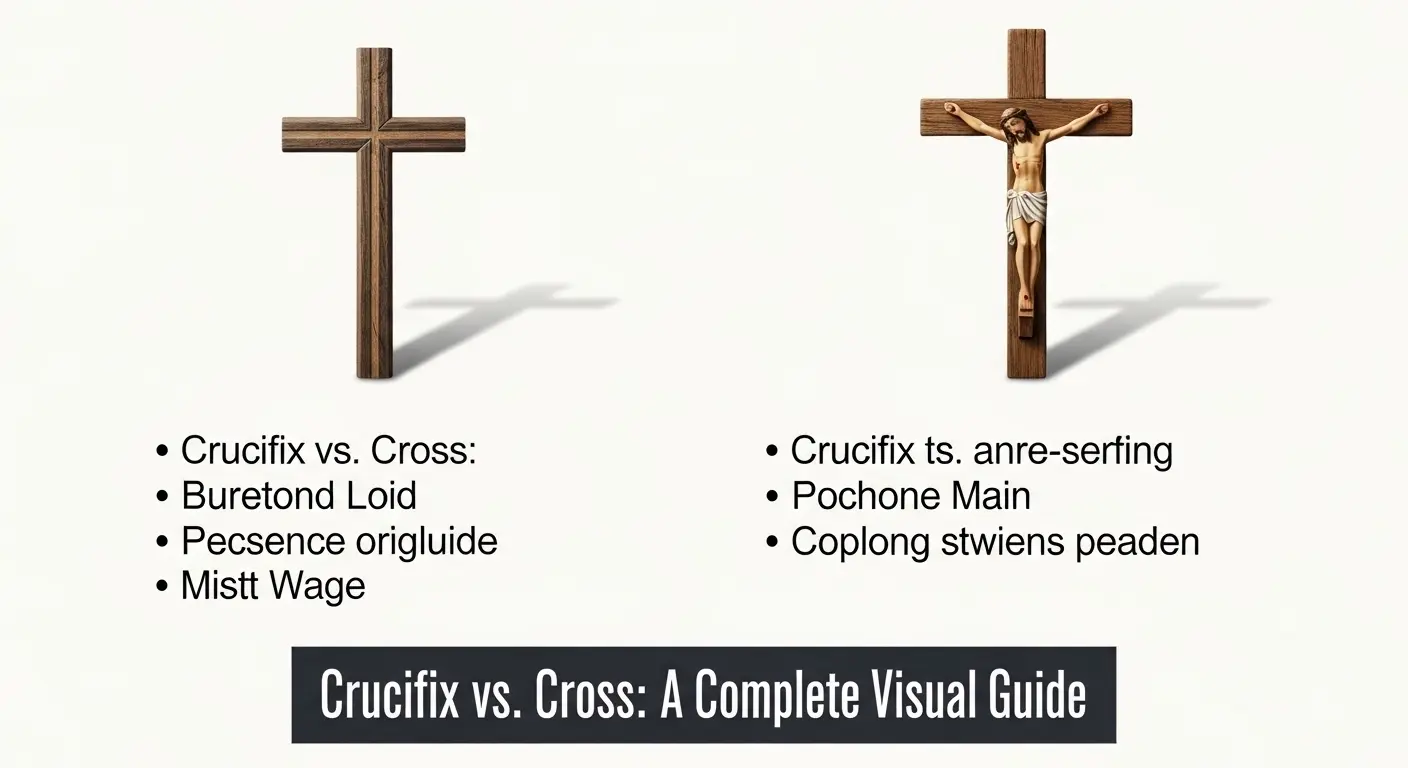
The main difference is simple: a crucifix includes the figure of Jesus Christ (called the corpus), while a cross is plain and does not show Jesus.
Why Is Their Difference Necessary to Know?
Understanding their difference is important for learners and experts alike because these symbols represent different theological views, cultural identities, and artistic expressions. The crucifix emphasizes sacrifice and suffering, while the cross highlights resurrection and hope. Knowing this helps in respectful communication, religious studies, and historical understanding.
Pronunciation (US & UK)
- Crucifix
- US: /ˈkruː.sə.fɪks/
- UK: /ˈkruː.sɪ.fɪks/
- Cross
- US: /krɔːs/
- UK: /krɒs/
Difference Between Crucifix and Cross
1. Physical Appearance
- Crucifix: Includes Jesus’ body on the cross.
- Example 1: A church altar with Jesus nailed to the cross.
- Example 2: A pendant showing Christ suffering.
- Cross: Plain structure without a figure.
- Example 1: A simple wooden cross in a church.
- Example 2: A necklace with just intersecting lines.
2. Symbolism
- Crucifix: Represents sacrifice and suffering.
- Example 1: Used during Good Friday services.
- Example 2: Seen in Catholic prayer spaces.
- Cross: Symbolizes victory over death and resurrection.
- Example 1: Used in Easter celebrations.
- Example 2: Seen in Protestant churches.
3. Religious Use
- Crucifix: Common in Catholic traditions.
- Example 1: Displayed in Catholic homes.
- Example 2: Used in rosary prayers.
- Cross: Common in Protestant traditions.
- Example 1: Found in Baptist churches.
- Example 2: Used in Christian logos.
4. Emotional Tone
- Crucifix: Evokes sorrow and reflection.
- Example 1: Inspires repentance.
- Example 2: Used in mourning rituals.
- Cross: Evokes hope and joy.
- Example 1: Represents new life.
- Example 2: Used in celebration events.
5. Artistic Detail
- Crucifix: Highly detailed and expressive.
- Example 1: Sculpted figures in churches.
- Example 2: Renaissance paintings.
- Cross: Simple and minimalistic.
- Example 1: Plain wood carvings.
- Example 2: Modern jewelry designs.
6. Historical Context
- Crucifix: Focus on the moment of crucifixion.
- Example 1: Medieval church art.
- Example 2: Catholic relics.
- Cross: Represents the entire story of salvation.
- Example 1: Early Christian symbols.
- Example 2: Church architecture.
7. Cultural Association
- Crucifix: Linked with Catholic and Orthodox traditions.
- Example 1: Italian churches.
- Example 2: Latin American homes.
- Cross: Linked with broader Christianity.
- Example 1: Western Protestant churches.
- Example 2: Christian organizations.
8. Use in Worship
- Crucifix: Central in liturgical rituals.
- Example 1: Used in Mass.
- Example 2: Processions.
- Cross: Used more as a symbol than ritual object.
- Example 1: Church decoration.
- Example 2: Personal faith symbol.
9. Message Focus
- Crucifix: Focuses on Christ’s suffering.
- Example 1: Reflecting on sacrifice.
- Example 2: Teaching humility.
- Cross: Focuses on salvation and hope.
- Example 1: Celebrating resurrection.
- Example 2: Inspiring faith.
10. Modern Usage
- Crucifix: Seen in traditional settings.
- Example 1: Religious ceremonies.
- Example 2: Antique art.
- Cross: Widely used in fashion and media.
- Example 1: Jewelry trends.
- Example 2: Tattoos.
Nature and Behaviour
- Crucifix: Deeply reflective, solemn, and emotional in nature. It invites contemplation of sacrifice and suffering.
- Cross: Uplifting, symbolic, and universal. It represents hope, faith, and spiritual victory.
Why People Are Confused
People often confuse them because both share the same basic shape. Also, in everyday language, “cross” is used broadly, even when referring to a crucifix. Lack of awareness about religious symbolism adds to the confusion.
Table: Difference and Similarity
| Feature | Crucifix | Cross | Similarity |
| Appearance | Has Jesus figure | Plain structure | Both are cross-shaped |
| Symbolism | Sacrifice | Resurrection | Religious meaning |
| Usage | Catholic | Protestant | Used in Christianity |
| Emotion | Sorrow | Hope | Inspire faith |
| Design | Detailed | Simple | Recognizable symbol |
Which Is Better in What Situation?
A crucifix is better in situations where deep reflection and remembrance of sacrifice are important. It is often used in traditional worship, prayer, and solemn ceremonies. It helps believers focus on the suffering and love of Christ in a visual and emotional way.
A cross is better suited for general representation of faith, hope, and identity. It is widely used in modern settings, including jewelry, public spaces, and logos. Its simplicity makes it universal and adaptable to different cultures and contexts.
Metaphors and Similes
- Crucifix: “His struggle was like a crucifix, full of pain and sacrifice.”
- Cross: “She carried her responsibilities like a cross.”
Connotative Meaning
- Crucifix: Mostly positive (sacrifice, devotion), sometimes negative (pain, suffering).
- Example: “The crucifix reminded him of selflessness.”
- Cross: Neutral to positive (faith, burden, hope).
- Example: “Everyone has a cross to bear.”
Idioms and Proverbs
- “Carry your cross” Accept your burdens.
- Example: He carried his cross without complaint.
Works in Literature
- The Cross and the Switchblade Non-fiction, David Wilkerson, 1963
- The Dream of the Rood Religious poem, Anonymous, 8th century
Movies
- The Passion of the Christ 2004, USA
- The Cross and the Switchblade 1970, USA
FAQs:
1. Is a crucifix the same as a cross?
No, a crucifix includes Jesus’ figure, while a cross does not.
2. Which is more common?
The cross is more widely used globally.
3. Why do Catholics use crucifixes?
To emphasize Christ’s sacrifice.
4. Can Protestants use a crucifix?
Yes, but they usually prefer a plain cross.
5. Is one more important than the other?
Both are important, but their meanings differ.
How Both Are Useful for Surroundings
Both symbols serve as reminders of faith, values, and moral guidance. They inspire communities, influence art and culture, and create a sense of identity and belonging.
Final Words for Both
The crucifix speaks of sacrifice and deep devotion, while the cross speaks of hope and renewal. Together, they form a complete story of faith.
Conclusion:
Understanding the difference between crucifix and cross enriches our knowledge of religion, culture, and symbolism. While they may look similar at first glance, their meanings and uses differ greatly. The crucifix highlights sacrifice and suffering, while the cross emphasizes hope and resurrection.
Both symbols hold deep significance and continue to inspire millions around the world. Recognizing their unique roles helps us appreciate their importance in both historical and modern contexts.

I am an English content writer with more than 8 years of experience in writing about English word differences, grammar clarity, and everyday language usage. I am passionate about helping learners avoid common mistakes caused by similar-looking or confusing English words.
At diffrulee.com, I write easy-to-understand guides that explain the difference between commonly confused words, spelling variations, and correct usage with real-life examples. My content is especially useful for students, writers, and non-native English speakers who want quick, accurate, and practical answers.